
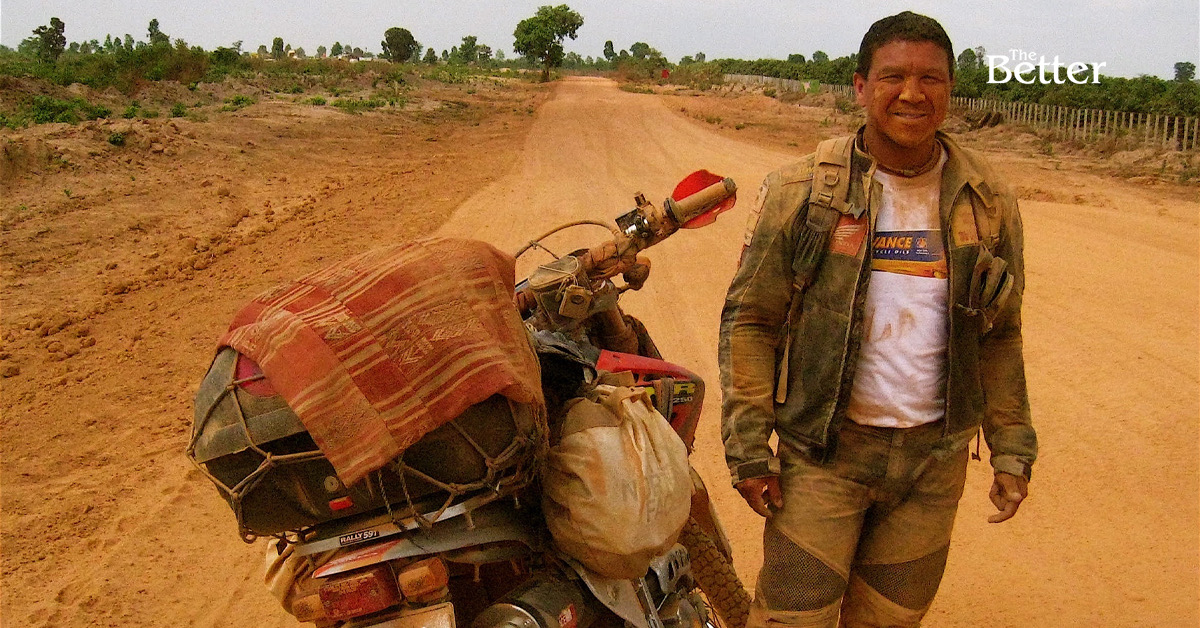
For Suki Kamol Sukosol Clapp, the motorcycle is more than a machine. It is a passport to the present, a means of escaping the insulated comforts of modern life, and perhaps the closest thing to a spiritual discipline. Somewhere between the open road, the wilderness and the people he encounters along the way, he has discovered something that success, money and fame could never quite deliver: the freedom to simply be.
There is a particular kind of freedom that cannot be bought, scheduled or summoned at will. You have to earn it, mile by mile, with the wind in your face and the road stretching out before you.
For Suki Kamol Sukosol Clapp, one of the founders of Thailand's influential Bakery Music label, that freedom comes on two wheels.
His career in music has given him plenty to be proud of. But the deeper satisfaction, he suggests, has come from somewhere considerably less glamorous: riding a motorcycle into the countryside, disappearing into the landscape and allowing the road to dictate the rhythm of his thoughts.
A motorcycle has a peculiar way of demanding your attention. There is no drifting off into yesterday's regrets or tomorrow's anxieties. There is only the road, the machine and the person riding it. And when those three become one, Suki says, something extraordinary happens.
"It's heaven."
That philosophy, along with decades of accumulated experience, has found its way into his latest project, Motorcycle Story: Life Experience on the Road, a book that is part practical guide, part travelogue and part personal meditation on what it means to live well.
In this conversation, Suki reflects on motorcycles, instinct, the people he has met across Thailand, the value of getting lost and the increasingly precious art of finding peace with oneself.
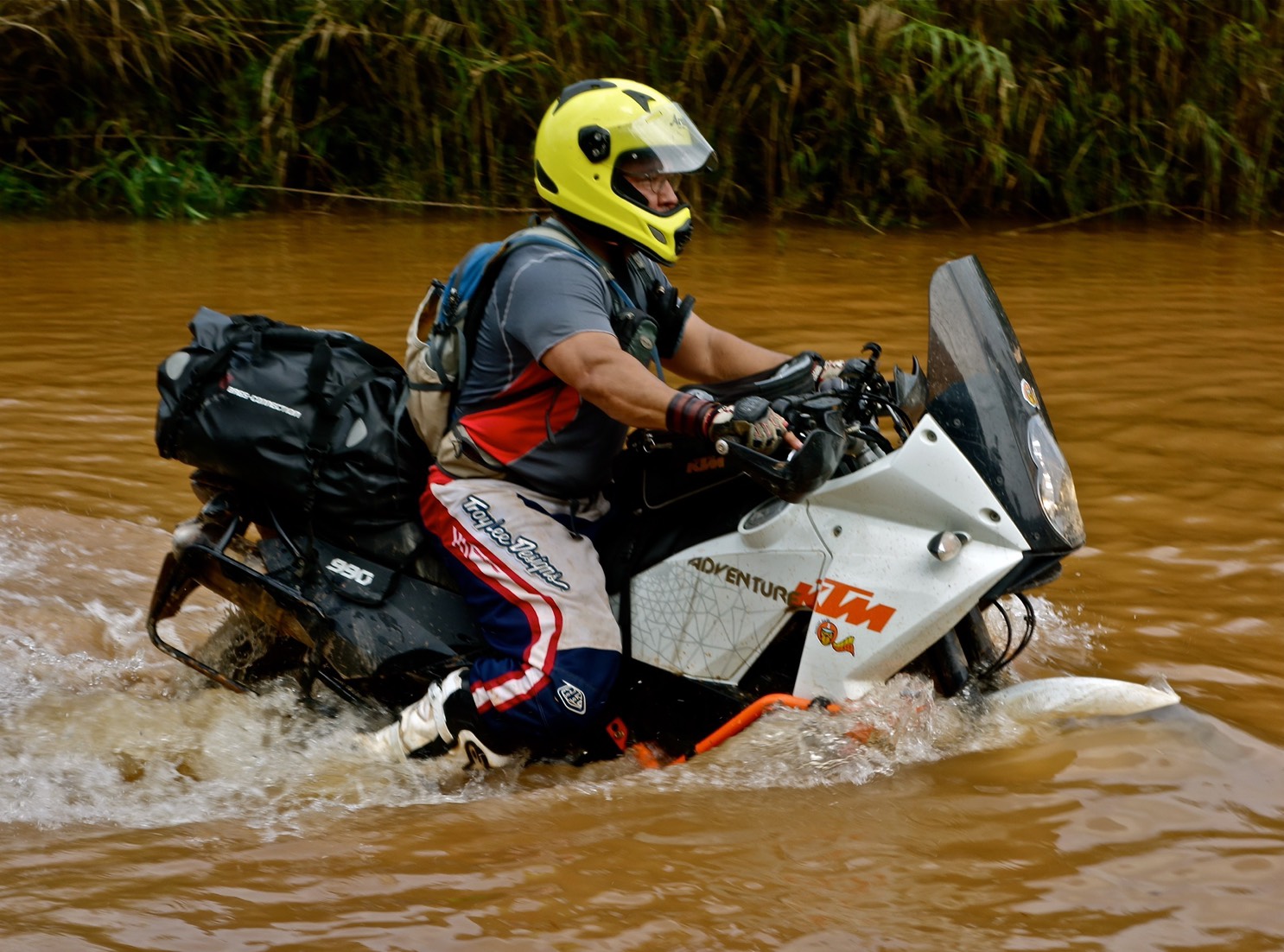
1. A Motorcycle Is More Than Transportation. It Is a Way of Learning to Be Present.
Suki began riding motorcycles at around 23, after completing his studies and entering the working world. What first attracted him was the machine's inherent character and the particular atmosphere surrounding the motorcycle scene around Bangkok's RCA district.
There was something magnetic about it. Something that made him want to get involved.
But his first piece of advice to anyone contemplating a life on two wheels is refreshingly unromantic: don't spend too much money.
A friend once warned him against rushing out to buy an expensive Harley-Davidson, potentially costing millions of baht, before he had even figured out what kind of motorcycle he actually enjoyed riding.
So he started with a Honda Shadow.
It is a lesson that extends well beyond motorcycles, he believes, particularly for younger people entering adulthood.
"Don't rush into buying expensive things. Start with something inexpensive. Try it, learn from it. You don't even know what you really like yet."
It is an argument for experimentation over investment, experience over appearances. There is little point in spending a fortune on an identity before discovering whether it fits.
What Suki finds most compelling about motorcycles, however, has little to do with horsepower or machinery. It is the extraordinary intimacy they create between rider and environment.
Driving a car, he says, is rather like sitting inside a refrigerator. You have air-conditioning, glass windows and a comfortable barrier separating you from the world outside.
A motorcycle offers no such insulation.
The wind, the temperature, the smell of the countryside, the changing texture of the road, the surrounding landscape — everything reaches you directly. You are not merely looking at the environment. You are physically immersed in it.
But the greatest attraction, he insists, is something he calls "Mindfulness Therapy".
Riding demands that you remain present. You cannot afford to become too preoccupied with yesterday or tomorrow. Your attention must stay with the road, the motorcycle and your own body.
You are, quite literally, forced to live in the moment.
For Suki, the most extraordinary experience occurs when rider, motorcycle and road merge into a single, seamless entity.
"When those three become one, that's heaven. It's magic. You don't have to think. Your instincts take over."
He compares the sensation to playing in a band when every musician is perfectly in sync. Nobody needs to calculate what comes next. The music simply happens. Everyone understands the others, and the performance unfolds almost instinctively.
It is a state of mind that has influenced his approach to work as well.
During his years at Bakery Music, whether selecting artists, developing music or making business decisions, Suki often relied on gut feeling rather than endless calculation.
He believes instinct has a place in almost everything we do.
The company you keep on the road matters, too.
A convoy of 100 motorcycles might look spectacular, with its collective energy and sense of camaraderie. But the reality, he observes, can be considerably less romantic. Large groups sacrifice a great deal of individual freedom. Everyone has to keep pace, accommodate one another and wait for the slowest member.
Even something as simple as refuelling can become a 40-minute exercise. And sometimes the entire group finds itself waiting an hour for someone to finish smoking.
He much prefers smaller groups of eight to ten riders.
There is room for individuality. Faster riders can move ahead; those who prefer a slower pace can take their time. Nobody needs to enforce an elaborate set of rules because everyone knows and understands one another.
His philosophy is simple:
"Ride your own ride."
Travel together, certainly. But don't surrender your individuality in the process.
There is, however, one anchor that keeps the freedom of the open road from becoming an endless exercise in escape: family.
Suki speaks particularly fondly of his eldest son, Dino, whom he describes as a foundation in his life.
Having a child gives a person somewhere to return to. No matter how far the road leads, there is always a reason to come home.
Freedom, it seems, is not necessarily about having nowhere to go. Sometimes it is knowing exactly where home is.
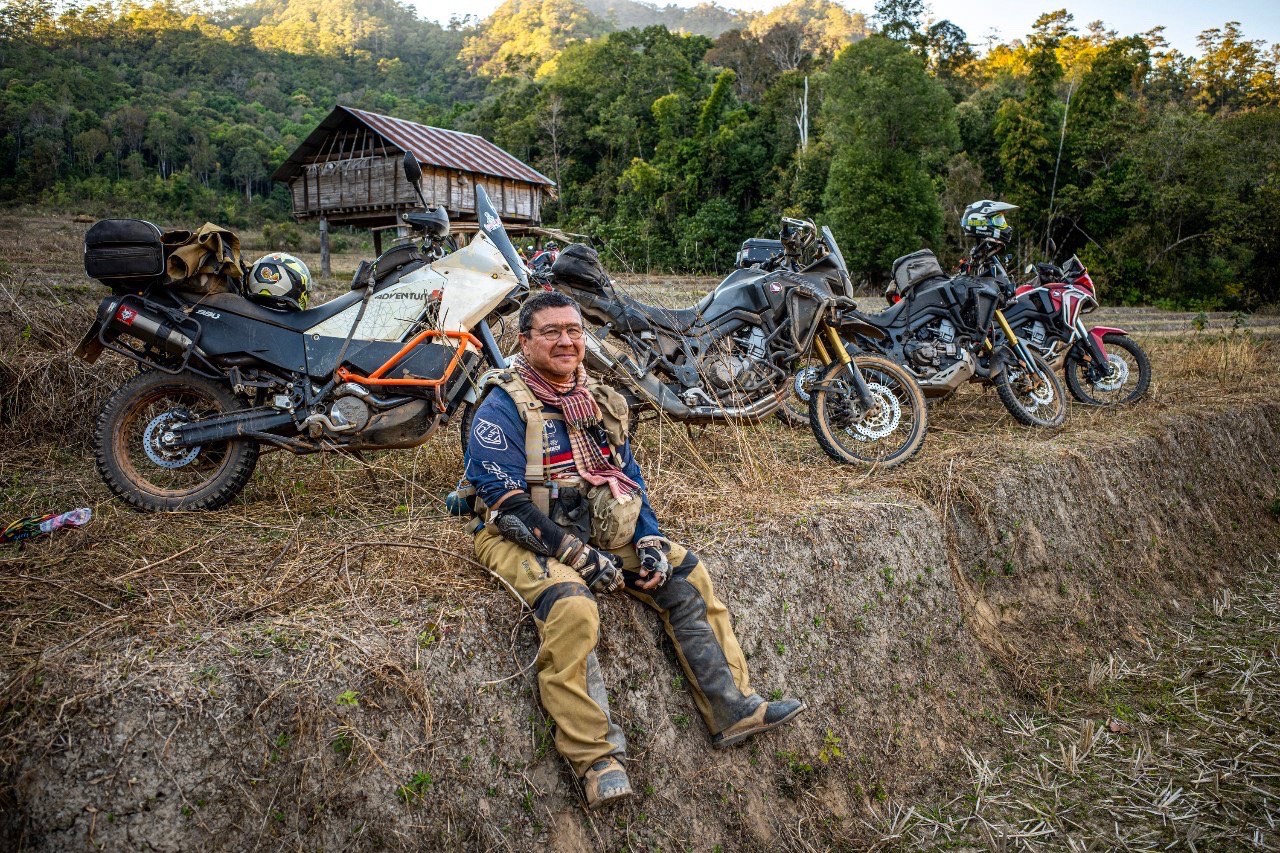
2. The Best Journeys Are Not About Reaching a Destination. They Are About Discovering How Other People Live.
Suki makes a distinction between being a tourist and being a traveller.
A tourist might visit beautiful places, stay in comfortable hotels, take photographs and return home with a collection of memories.
A traveller, at least in his understanding of the word, wants something more.
A traveller wants to understand how people actually live. What they eat. What they think about. What matters to them. How they see the world.
For Suki, a decisive change in perspective came after he left Bakery Music.
He headed south, initially intending to visit Khao Lak. But upon arriving, he encountered the sombre atmosphere left by the devastating tsunami. Rather than continue with his original itinerary, he changed course and travelled to Koh Lanta in Krabi province.
He did not check into a five-star resort.
Instead, he found a simple bungalow belonging to a local resident known as Puenri, paying approximately 300 baht a night.
It was hardly luxury travel. That was precisely the point.
Living among local residents and foreign visitors, he began to experience a different kind of holiday — one in which the most memorable activities were often the least spectacular.
Even something as mundane as joining other people to clean rubbish from the beach became part of the experience.
These were the sorts of moments that conventional tourism rarely makes room for.
The experience fundamentally altered his perspective on travel. Comfort and beautiful scenery were no longer the primary objectives. What mattered was the opportunity to step, however briefly, into someone else's world.
Another memory comes from a visit to the village of Jabo.
There, he slept in a hammock at a local noodle shop. The owner, noticing the cold weather, brought him a quilt and helped him work out the route ahead.
Nothing particularly extraordinary happened. There was no luxury accommodation, no elaborate hospitality programme and no carefully curated tourist experience.
Just a stranger offering another stranger a little warmth and kindness.
Sometimes, Suki suggests, that is more than enough.
Riding through Thailand's provinces has also given him a more intimate understanding of the country's social fabric — one that cannot always be gleaned from newspapers, television or the familiar images of Thailand presented to outsiders.
He has noticed, for example, that in some rural communities women appear to shoulder much of the responsibility for managing household affairs, while some men spend considerable time drinking.
He has also encountered people whose greatest aspiration is to become civil servants, attracted by the stability, benefits and security such a career can offer their families.
These observations are not offered as universal truths, but as glimpses into the different circumstances that shape people's choices.
And that, perhaps, is the most important lesson he has taken from travelling: the need to abandon the assumption that one's own way of thinking is necessarily the right one.
"There is no absolute right or wrong when it comes to culture. Nobody has the right to judge another person's way of life simply because they don't live the way we do."
People are products of different environments, languages, upbringings and experiences. What seems entirely reasonable to one person may make little sense to another.
Suki also admires those who have the courage to step outside the familiar boundaries of their lives.
He points to people who leave Bangkok to establish businesses in the provinces, including the owners of Sweet M and a young entrepreneur known as Moss in Khao Lak.
These are people who have chosen to rewrite their own circumstances, building businesses and lives according to their own convictions.
There is something deeply admirable about that, he says.
After all, there is no obligation to spend your entire life following a route somebody else has mapped out for you.
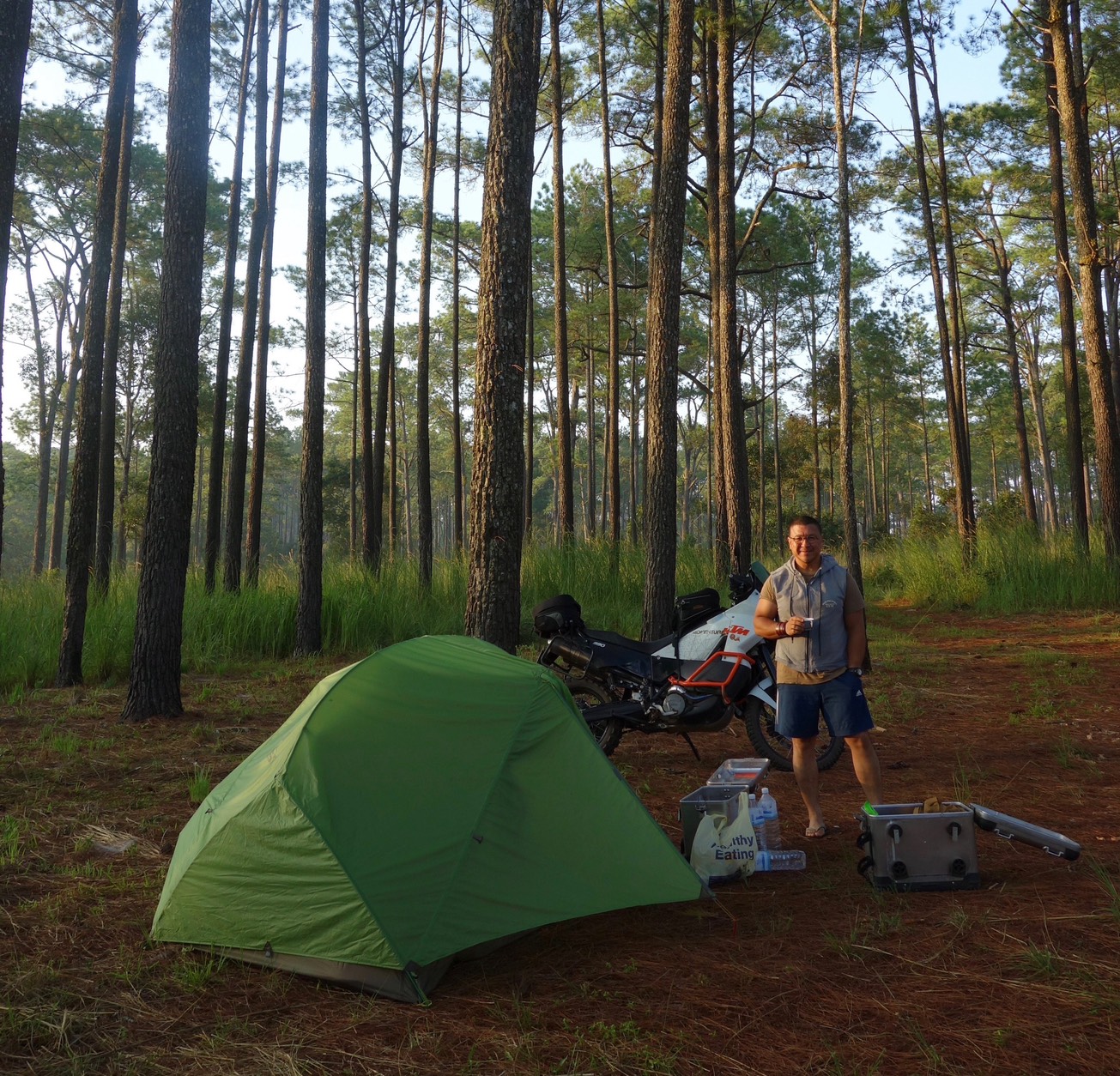
3. A Book Meant to Be Used, Not Just Admired on a Coffee Table.
Suki has invested considerable energy in his latest book, and financial returns were never his principal motivation.
He wanted to produce something readers could actually use — not another handsome coffee-table publication destined to sit unopened beneath a collection of decorative objects.
The book is divided into two main sections.
The first is a practical guide for aspiring motorcycle travellers, covering everything from choosing a bike and preparing for a journey to packing equipment and understanding the essentials of a successful trip.
His particular interest lies in adventure motorcycling and dual-sport motorcycles, machines designed to handle a variety of terrain and take riders beyond conventional roads.
Choosing the right motorcycle, he explains, involves considerably more than brand recognition or aesthetics.
Riders need to consider seat height, weight, engine capacity and reliability. A 500cc motorcycle may be more appropriate for one person, while another might prefer an 800cc machine.
The decision also depends on whether you intend to ride alone or carry a passenger, and on the kind of terrain you expect to encounter.
Packing is another subject he addresses in detail.
Some items may seem trivial until the moment you desperately need them.
Flip-flops, for instance. They might not sound like essential motorcycle equipment, but once you take off your riding boots, a spare pair becomes rather valuable.
Then there is duct tape.
Suki regards it as perhaps the most indispensable item in any rider's emergency kit. It can repair or temporarily secure an astonishing variety of things. A torn shoe can be patched up; a damaged exhaust component might even be temporarily stabilised sufficiently to get the motorcycle home.
He also discusses camping, choosing outdoor equipment, his favourite pieces of kit and practical advice for those hoping to introduce their partners to the pleasures of travelling in the wilderness.
There is another subject he takes surprisingly seriously: punctuality.
A motorcycle trip requires collective discipline. If the group agrees to leave at six in the morning, then six means six.
Someone who turns up late cannot expect everyone else to wait indefinitely. Excessive consideration for individual tardiness can ultimately undermine the entire journey.
The book's second section features ten of his favourite motorcycle routes across Thailand.
Asked where he most enjoys riding, Suki points north, particularly to Nan province.
There are fewer people and cars, the roads are good, the weather is pleasant and the atmosphere lends itself beautifully to motorcycle travel.
But he also recommends a less conventional route around Pai, one that avoids the heavily travelled Highway 1095 — the road used by virtually all visitors, perhaps 99.9 per cent of them.
His preferred journey begins in Chiang Mai, continuing through Mae Taeng, Mae Taman and Pa Miang before entering forest tracks and gravel roads. From there, riders proceed to Mueang Khong, then Huai Nam Dang, before finally reaching Pai.
It is a route that offers a more intimate encounter with the countryside, far removed from the familiar tourist corridor.
Not every journey, naturally, goes according to plan.
On one occasion, Suki rode off a wooden bridge, locally known as a saphan si, while travelling through the forest towards Mueang Khong. The bridge was approximately two metres high.
He escaped with little more than bruising and swelling.
Remarkably, his Honda motorcycle still started afterwards, despite having suffered considerable damage and ended up somewhat bent out of shape.
The incident reinforced his appreciation for the durability of motorcycles. But it also reminded him of something else he considers one of Thailand's great advantages.
Almost wherever you travel in the country, even in relatively remote towns and communities, you can usually find a basic motorcycle repair shop.
A mechanical problem does not necessarily mean the end of the journey. There is often somebody nearby who can help get you moving again, or at least get you home.
The south offers a different proposition.
The long stretch from Bangkok towards Chumphon, he admits, can be rather monotonous — miles of relatively straight highway without much to distinguish one section from another.
But turn west from Chumphon, towards Ranong or Khao Sok, and the landscape changes dramatically.
Suddenly, there are forests, mountains and the Andaman coastline, offering a completely different character from the north.
These are the routes he wants readers to discover.
The intention is that someone should be able to open the book, consult a map and actually set off on the journey.
Beautiful photographs are welcome, of course. But the real point is to get out there.
4. Growing Older, Letting Go and the Quiet Pursuit of Inner Peace.
Approaching 60, Suki says he has changed considerably.
Honesty, tranquillity and an acceptance of other people's differences have become increasingly important to him.
He has always valued speaking the truth, even when doing so might make somebody uncomfortable. Being honest with oneself and with others, he believes, is fundamental.
But age has also taught him something equally important: not every disagreement deserves an argument, and not every person needs to be defeated.
These days, he cares much more about peace of mind.
"Toxic" situations are no longer worth his time. He has little appetite for unnecessary arguments or conflicts that leave everyone feeling worse.
There is a particular expression he likes:
"If you tell me 1 + 1 = 5, you're right. Have fun."
It is not an admission that facts no longer matter. Rather, it is a recognition that arguing with someone who has no intention of listening is often a spectacular waste of energy.
Suki does not believe that genuinely evil people are particularly numerous. Much of the conflict between human beings, he suggests, stems from two recurring problems: ego and insecurity.
People say and do hurtful things because their egos take control. Beneath that behaviour, however, there is often a deeper lack of confidence in themselves.
These two forces can turn ordinary disagreements into personal battles, damaging relationships and making life unnecessarily difficult for everyone involved.
If people could learn to manage their egos and confront their insecurities, he believes, the world would be a considerably happier place.
For Suki, happiness has little to do with professional rank or intellectual superiority.
What matters is whether you are happy with your life and whether you bring positive energy to the people around you.
One of the hardest lessons he has learned concerns self-worth.
In the past, he was sometimes dismissed as a privileged rich kid — someone whose ability to establish a successful business was supposedly explained by family wealth and a favourable upbringing.
That perception stayed with him.
But the experience of building Bakery Music, and the success that came from the actual work, helped him develop a stronger sense of personal value and confidence.
He came to understand that a person's worth is not determined by money or family background, but by what that person is capable of creating independently.
Once you become comfortable with your own value, there is less need to spend your life proving yourself to other people or allowing society's judgments to dictate your identity.
Perhaps that is what growing older is ultimately about: learning to accept reality, relinquish unnecessary pride and become more comfortable in your own skin.
5. The Creative Instinct: Building Something That Will Outlast You.
If asked to describe himself, Suki would probably start with one word: creative.
The impulse to make things, to construct something out of nothing, has been part of his personality since childhood.
Between the ages of seven and ten, he recalls spending entire weeks alone in his room building LEGO creations.
He loved taking small, disconnected pieces and gradually transforming them into something that had existed only in his imagination.
That same instinct has followed him throughout his career — from producing music and organising concerts to making television programmes and, now, publishing a book.
He enjoys the process of creation itself.
But creativity, in his view, cannot be separated from professional standards.
Whatever you choose to do, you should do it properly, with care, precision and a genuine commitment to quality.
He has little patience for people who use artistic expression as an excuse for poor workmanship.
If a guitarist plays out of tune and insists that it is simply his personal style, Suki is unconvinced.
Having a distinctive style does not give anyone permission to abandon standards.
Creativity and professionalism, he believes, must go hand in hand.
The book also possesses something he finds particularly meaningful: physical permanence.
Unlike music, which exists in a form that can be reproduced and experienced in countless ways, a book is an object that can be held, opened, passed from one person to another and kept for years.
It can remain in the world long after its creator is gone.
That is one of the reasons he wanted to see this project through.
The idea first took shape during the Covid-19 pandemic, when Suki began writing and assembling material. But as life returned to normal, music and other professional commitments reclaimed his attention. The manuscript came dangerously close to becoming another unfinished project sitting forgotten on a computer.
Then the design team presented him with four or five printed prototypes.
At the time, the working title was Noor.
Seeing the words and ideas that had existed only on a screen transformed into an actual book rekindled his enthusiasm. Suddenly, he could see what the finished project might become.
It seemed a shame to allow all that work to remain trapped inside a computer.
So he decided to finish it.
Ultimately, Suki sees the book as something considerably larger than a motorcycle manual or a travel guide.
It is a collection of experiences — lessons gathered from strangers, landscapes, roads, nature and the long process of getting to know oneself.
It is something he hopes others can genuinely benefit from, and another piece of work he can look back on with pride.
Perhaps the most interesting thing about Suki's relationship with motorcycles is that he does not seem particularly interested in escaping life.
He is interested in getting closer to it.
The road strips away many of the conveniences and distractions that make modern existence so comfortable, but also so detached. It places you directly in contact with the world, sometimes beautifully, sometimes inconveniently, occasionally painfully.
You meet people whose lives bear little resemblance to your own. You discover places that do not appear on the standard tourist itinerary. You make mistakes, suffer mechanical failures, take wrong turns and occasionally find yourself sleeping in a hammock above a noodle shop.
And somewhere along the way, you begin to understand that the journey was never entirely about the destination.
It was about paying attention.
About learning to trust your instincts without surrendering your judgment. About discovering that other people have their own perfectly legitimate ways of living. About knowing when to stand your ground and when to walk away.
And perhaps, most importantly, about knowing that the greatest freedom is not the freedom to go anywhere without restraint, but the freedom to be entirely at ease with who you are.
Five Lessons from the Road
1. On Starting Out
"Don't rush into buying something expensive. Start with something inexpensive. You don't yet know what you really want."
2. On Mindfulness and Motorcycling
"A motorcycle forces you to live in the present. When you, the motorcycle and the road become one, it's heaven. You don't have to think. You simply follow your instincts."
3. On Ego and Accepting Others
"Travelling teaches us that there is no absolute right or wrong when it comes to culture. Everyone grows up differently. People who believe their own way is the only correct way probably aren't very intelligent."
4. On Growing Older and Finding Peace
"The older I get, the more I care about peace of mind. I don't want anything toxic anymore. If you tell me that one plus one equals five, you're right. Have fun."
5. On the Human Condition
"What brings people down, myself included, is ego and insecurity. We say and do things because of our egos, while deep down we may not even be confident in ourselves. If we can overcome those two things, we will be much happier."
The Better News English