
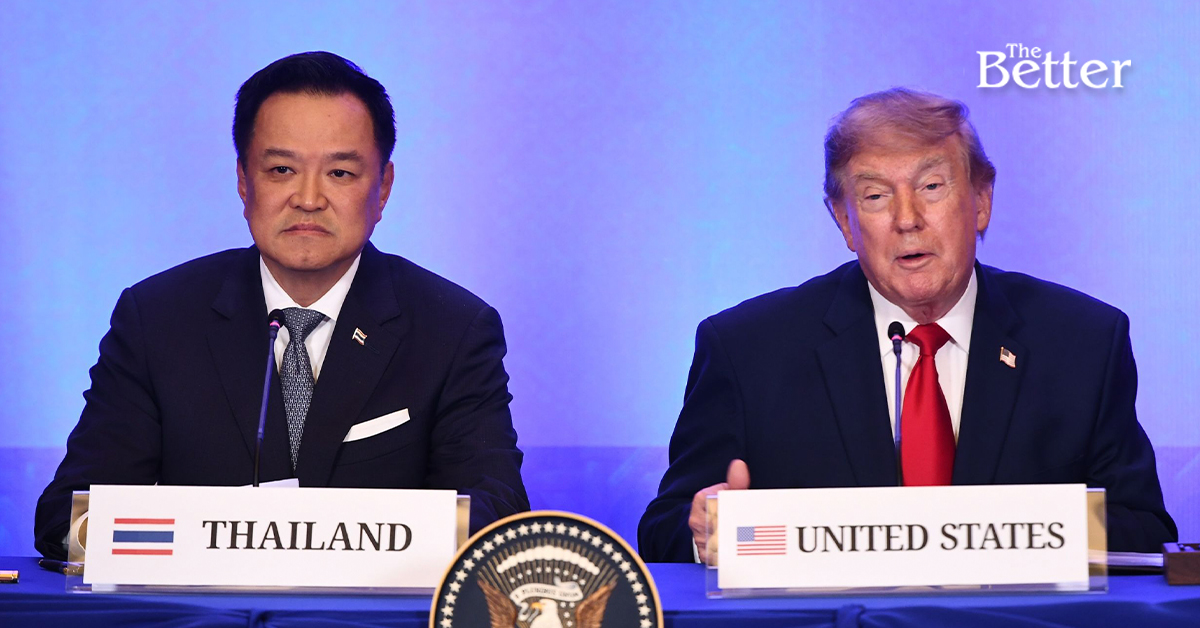
Thailand's emerging trade framework with the United States offers a potentially valuable reprieve from Washington's tariff offensive, but the political fanfare surrounding the agreement risks obscuring an uncomfortable question: what is Thailand giving up to secure access to its biggest export market, and whether the concessions will outweigh the benefits?
The deal appears to be less a clean victory for Thailand than a negotiated insurance policy against a more hostile trade environment. It could preserve export competitiveness, shore up investor confidence and deepen economic ties with the US. But its benefits will depend on the fine print, the sectors exposed to American competition, and whether Bangkok can translate tariff relief into long-term industrial upgrading rather than merely buying time.
A deal driven by asymmetry, not reciprocity
The headline promises reciprocal trade; the underlying bargain is considerably more asymmetric.
The agreement on reciprocal trade (ART), announced in Manila on November 17, comes at a moment when Thailand has little incentive to jeopardise its access to the American market. The US is Thailand's largest export destination, accounting for roughly a quarter of its exports. The stakes are substantial: Thai exports to the US were worth approximately 2.37 trillion baht in 2025, supporting an estimated 1.25 million jobs, according to Thailand's Commerce Ministry.
For Bangkok, securing a more predictable tariff environment is therefore less about winning new commercial territory than protecting existing economic lifelines. The agreement offers exporters a measure of certainty against Washington's increasingly transactional trade policy, in which market access has become a bargaining chip for extracting concessions from trading partners.
But the structure of the bargain is telling. Thailand is expected to dismantle tariffs on a broad range of American goods, while Thai exports remain exposed to US tariff measures. The framework discussed in 2025 envisaged Thailand removing tariffs on approximately 99% of US goods, while Washington retained a reciprocal tariff rate of 19%, with selected products potentially eligible for exemptions. The current negotiations have involved efforts to secure more favourable treatment, including lower tariff rates and exclusions.
The deal thus reflects Thailand's defensive pragmatism: accept a substantial opening of its own market in exchange for avoiding a potentially more damaging deterioration in access to the American one.
The immediate dividend: export stability and investor confidence
The strongest argument in favour of the deal is not necessarily that Thailand will export more overnight, but that it may avoid exporting less.
A stable tariff regime matters disproportionately to manufacturers operating on thin margins, particularly those supplying electronics, machinery, automotive components, appliances, rubber products and other industrial goods. Tariffs can erode price competitiveness, compress margins and encourage American buyers to shift sourcing towards rival economies. A more predictable framework could help Thai manufacturers retain orders and give multinational companies greater confidence in maintaining production capacity in the country.
The agreement may also improve Thailand's competitive positioning against regional rivals, particularly if Bangkok succeeds in negotiating tariff treatment comparable to Malaysia, Indonesia and Cambodia. Commerce Minister Suphajee Suthumpun is seeking to lower the relevant US tariff burden from 12.5% to 10%, arguing that Thailand should be placed on similar footing with countries that have secured comparable trade arrangements.
This is consequential for investment decisions. Companies choosing where to locate their next factory are not merely comparing wages, tax incentives or infrastructure; they are also calculating the risk of future tariff shocks. Thailand's ability to demonstrate that it can negotiate and maintain commercially viable access to the US market may help preserve its attractiveness as a regional manufacturing base.
Yet tariff stability is a floor, not a ceiling, for economic success. It can prevent the deterioration of competitiveness without necessarily generating the productivity gains, technological sophistication or new investment that Thailand needs to escape its middle-income trap.
Agriculture: the most politically sensitive price of market access
Agriculture may prove to be the agreement's most contentious domestic battleground.
Washington has made agricultural access a central negotiating priority, and President Donald Trump said Thailand would purchase an estimated US$2.6 billion in additional American agricultural products. The purchases are intended to placate US farm interests while demonstrating that the agreement delivers tangible commercial gains to American producers.
For Thailand, however, the opening of its agricultural market carries a complicated trade-off. American producers benefit from economies of scale, extensive mechanisation, subsidised production in some sectors, sophisticated logistics and large volumes of commodity supply. Thai farmers, particularly smaller operators, may find themselves competing against imports with lower production costs or more stable supply chains.
The exposure could extend across feed grains, meat, dairy products, processed agricultural goods and other food categories. Even if consumers benefit from cheaper imports, local producers could face price pressure, declining margins and a heightened need to improve efficiency.
The government's argument that tariff reductions will be carefully calibrated, with safeguards such as import quotas and protective measures where appropriate, is important. Thailand has emphasised that liberalisation will not necessarily be immediate or universal, and that product-specific schedules will govern the actual commitments.
But safeguards are only as effective as their design and enforcement. Once import competition intensifies, the adjustment costs can be concentrated among rural households and small businesses, while the benefits of lower prices are distributed more broadly but less visibly.
The political challenge for Bangkok will be to prevent trade liberalisation from becoming a one-way transfer of adjustment costs to farmers. If the agreement opens markets without accompanying investment in agricultural productivity, irrigation, technology, branding and access to finance, Thailand could end up trading short-term consumer benefits for long-term rural vulnerability.
Consumers may gain — but cheaper imports are not automatic
The government presents the deal as an opportunity to widen consumer choice and potentially reduce the cost of certain goods. Greater access to American products could benefit households and businesses reliant on imported inputs, including industrial equipment, medical products, agricultural commodities, energy-related products and some food items.
Lower import duties can reduce costs for businesses using US products in their production processes, potentially improving efficiency and reducing inflationary pressures. Thailand's manufacturing sector, for example, could benefit from access to machinery, components and technologies that are not readily available domestically.
However, the savings are not guaranteed to flow directly to consumers. Importers, distributors and retailers may absorb part of the tariff reduction through margins; exchange-rate movements, transport costs and domestic taxes could also offset any price declines.
Moreover, consumer welfare cannot be measured simply by the number of imported products available on supermarket shelves. The broader question is whether the agreement creates a more competitive economy in which firms become more productive and consumers receive better value — or whether it primarily reallocates market share from domestic producers to foreign suppliers.
The former would represent a genuine structural gain. The latter would be a more superficial form of liberalisation.
Gems and jewellery: an overlooked winner
Not every Thai industry faces liberalisation as a threat. The gems and jewellery sector could emerge as one of the agreement's more immediate beneficiaries.
The US jewellery industry has welcomed the breakthrough, which could restore duty-free treatment for loose coloured gemstones, natural pearls and diamonds imported from Thailand. The American Gem Trade Association has argued that many coloured gemstones cannot be commercially sourced in the US, making international supply chains indispensable to American jewellery businesses.
Thailand is a major centre for gemstone cutting, treatment, trading and jewellery manufacturing. Restoring favourable tariff treatment could reinforce its position in the American market, protect orders and help preserve value-added production and skilled employment.
This is a reminder that the deal's economic effects will be uneven. For some Thai industries, opening the domestic market to US competition may be the cost of securing improved access abroad. For others, particularly export-oriented sectors with established supply chains and limited direct American competition, the agreement could be a straightforward commercial opportunity.
The distinction matters. The real measure of a trade deal is not whether it produces equal concessions across every sector, but whether the gains from expanding export opportunities and lowering input costs exceed the losses incurred by vulnerable industries.
The hidden bargain: regulatory concessions and strategic dependence
Tariffs are only part of the story. The more consequential provisions may concern non-tariff barriers — rules governing standards, certifications, licensing, customs, market entry and regulation.
The US has sought greater access for its vehicles, medical devices, pharmaceuticals, ethanol, poultry and other agricultural products. The earlier framework also envisaged accepting US vehicle standards and certain American regulatory approvals for medical products, easing restrictions and streamlining trade procedures.
Such measures could lower compliance costs, speed imports and remove bureaucratic duplication. Yet they raise a broader question about Thailand's regulatory autonomy and its ability to preserve domestic standards that reflect local public-health, safety, environmental and industrial priorities.
Regulatory recognition is not inherently a concession of sovereignty. Internationally accepted standards can reduce unnecessary barriers and improve efficiency. But the distinction between removing redundant paperwork and weakening substantive safeguards is crucial.
Thailand should avoid allowing commercial pressure to turn regulatory harmonisation into regulatory dilution. The benefits of a more open market will be durable only if the country retains the ability to scrutinise products, enforce safety standards and protect legitimate public interests.
The chip issue adds another layer of strategic uncertainty. Trade access cannot insulate Thailand from US export controls or broader technology restrictions, particularly as Washington increasingly treats semiconductors, advanced computing and supply chains as national-security assets. Thailand may secure a more favourable tariff relationship while still confronting restrictions on technology, equipment or access to strategic inputs.
That is the limit of bilateral trade diplomacy: it can ease friction in commerce, but it cannot neutralise the geopolitical logic of America's technology policy.
The deal is unfinished — and that is where the real risk lies
Perhaps the most important caveat is that the November 17 signing was not the execution of a fully completed trade treaty. Trump and Anutin Charnvirakul signed a joint statement confirming that negotiations had reached substantial conclusion, while legal drafting, technical details and domestic procedures remain outstanding.
That distinction is more than diplomatic semantics. The final tariff schedules, product exemptions, implementation timelines, safeguards and enforceable obligations will determine the agreement's actual economic impact. The celebratory rhetoric has preceded the publication of the full commercial ledger.
For Thailand, this creates both an opportunity and a risk. The government still has room to negotiate implementation details, seek additional exemptions and ensure that sensitive industries are not exposed to abrupt competitive shocks. But the political momentum behind the agreement could make it harder to reopen difficult provisions once leaders have publicly declared negotiations successful.
The government should therefore resist treating the signing as the finish line. Parliamentary scrutiny, transparent disclosure of tariff schedules, sector-by-sector impact assessments and consultation with farmers, SMEs, manufacturers and consumers are essential to determining whether the bargain is genuinely in the national interest.
Verdict: Thailand has bought certainty, not prosperity
The Thailand–US trade framework is more beneficial to Thailand as a defensive economic strategy than as a transformative growth strategy.
It helps protect a crucial export market, reduces the risk of tariff disadvantage against regional competitors, potentially restores favourable treatment for certain industries and offers opportunities to lower input costs and diversify commercial ties. In an increasingly protectionist global economy, avoiding a trade confrontation with Washington is itself a meaningful achievement.
But the price is a broader opening of Thailand's domestic market, potentially exposing agricultural producers, smaller manufacturers and less competitive businesses to a formidable American supply chain. The promised benefits will not be distributed evenly, and the agreement does not guarantee a surge in exports, investment or productivity.
The danger is that Thailand may mistake the preservation of market access for the creation of competitiveness. Tariff relief can protect factories today, but it cannot substitute for better skills, innovation, industrial technology, stronger domestic suppliers and higher productivity.
Ultimately, the ART should be judged not by the optics of a signing ceremony or the size of the market theoretically opened, but by whether Thailand uses the breathing space to upgrade its economy.
Bangkok may have secured a reprieve from Washington's tariff pressure. What it has not yet secured is a guarantee that Thailand will be better equipped to compete when the next round of global economic coercion arrives.
The Better News English