
Who should Thailand hold responsible for the contamination of the Mae Sai, Kok and upper Mekong rivers? The answer is far more complicated than pointing the finger at China or Myanmar. At the heart of the problem lies the largely overlooked Wa State, a powerful quasi-independent entity whose relationship with Beijing is considerably more complex than it might appear.
When shouldering the consequences of toxic contamination in the Mae Sai River, the Kok River and the upper reaches of the Mekong, Thailand faces a fundamental question: whom should it hold accountable?
Thai civil society groups have previously sought to exert pressure on the Chinese government through the Consulate-General of the People's Republic of China in Chiang Mai. Their argument is straightforward: the pollution originates from Chinese-owned mining operations in Myanmar’s Shan State, where toxic substances are discharged into waterways at their headwaters before flowing downstream into Thailand, exposing local communities to the full extent of the environmental damage.
The Thai government, by contrast, appears inclined to place responsibility on Myanmar. Sihasak Phuangketkeow, Deputy Prime Minister and Minister of Foreign Affairs, travelled to Myanmar to discuss the contamination affecting the Mae Sai and Kok rivers. He noted that the matter had previously been raised during the visit to Thailand by Myanmar's leader, Senior General Min Aung Hlaing. Asked whether Myanmar's authorities could engage with the administration in Shan State, however, Sihasak observed that the Myanmar government would probably have to deal with its own internal affairs first.
The two approaches reflect fundamentally different assessments of the problem, as well as divergent expectations about who has the authority and leverage to resolve it.
Yet there is another actor that has largely escaped public scrutiny: the Wa State.
The power behind the mines: The Wa State
The illegal mining operations implicated in the contamination of rivers flowing into Thailand are located in territory controlled by the Wa State. Although the territory is formally recognised as part of Shan State within Myanmar, its political and military reality is markedly different. It operates largely beyond the effective jurisdiction of both the Shan authorities and Myanmar's central government.
In practical terms, the Wa State functions as a de facto autonomous entity, exercising considerable control over its territory, institutions and security apparatus.
Its emergence is rooted in Myanmar's protracted civil conflict, which created political and administrative vacuums that enabled ethnic armed organisations to carve out autonomous enclaves. Among these groups, the Wa possess arguably the most formidable military capabilities, allowing them to establish a territorial order that few other actors in Myanmar are willing or able to challenge.
Even Myanmar's military has maintained a ceasefire with the Wa for years, an arrangement that has proved considerably more durable than its agreements with numerous other armed groups. This enduring military equilibrium reflects not only overlapping interests but also the formidable strength of the Wa forces, which has compelled Myanmar's military establishment to exercise considerable restraint.
Nevertheless, the Wa's military reach does not extend across the entirety of Shan State. Its territory is therefore divided into two geographically disconnected enclaves: Northern Wa State, which borders China, and Southern Wa State, which borders Thailand's Chiang Mai and Chiang Rai provinces.
Northern Wa State shares a frontier with China's Yunnan Province and covers approximately 17,000 square kilometres. Southern Wa State, by comparison, encompasses roughly 13,000 square kilometres and lies along Thailand's northern frontier. The two territories are separated by the eastern part of Shan State.
The river pollution affecting Thailand is linked to mining activities in Southern Wa State, particularly in the vicinity of Mong Hsat.
The significance of this geographical and political distinction is that Thailand's public authorities have largely failed to hold the United Wa State Army (UWSA), the military organisation exercising control over the territory, directly accountable. Instead, Bangkok has concentrated its diplomatic engagement on Myanmar's government and military—institutions that, notwithstanding their formal sovereignty over the territory, exercise little effective control over the Wa administration.
China's influence over the Wa: Leverage without command
There is, however, another country that can engage with the Wa State: China.
It is important to distinguish between being able to talk to the Wa leadership and being able to control it. China possesses considerable influence over the Wa State, but that influence should not be mistaken for direct command.
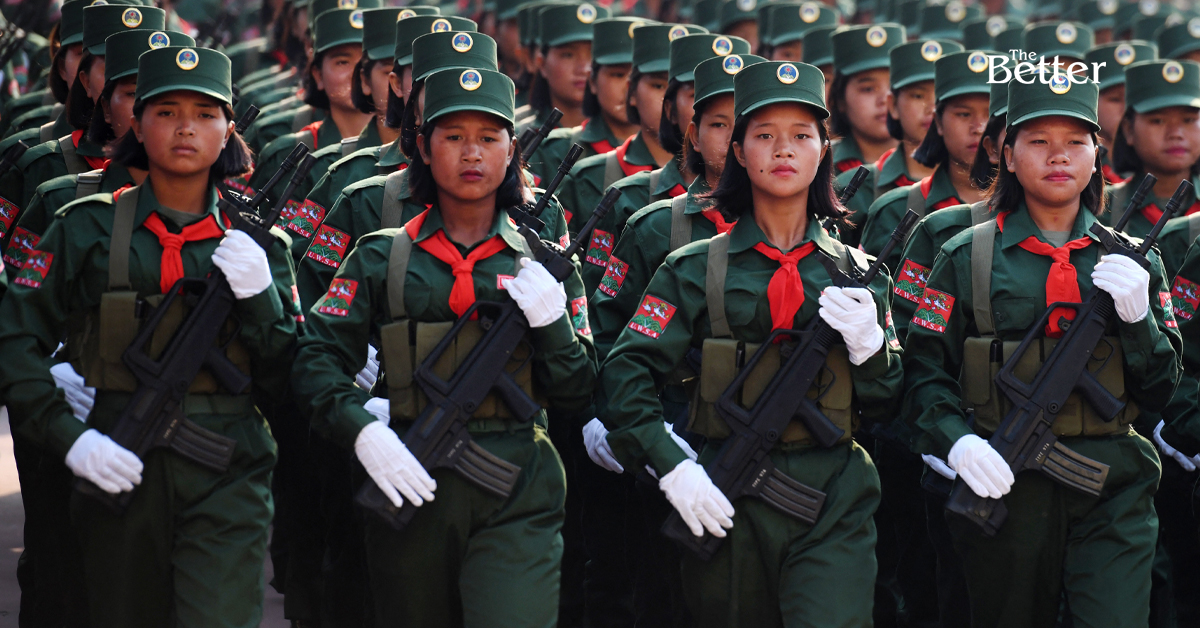
The United Wa State Army is also commonly referred to as the "Red Wa". The designation reflects its historical communist roots. Bao Youxiang, the organisation's leader, was formerly associated with the Communist Party of Burma, an armed communist movement backed by China, before breaking away to establish his own Wa military organisation.
Although the Wa subsequently established their own political entity, its administrative architecture and ideological orientation retain unmistakable communist characteristics and considerable Chinese influence.
The Wa administration is officially known as the People's Government of Wa State, a designation closely resembling China's political nomenclature. Its principal parliamentary institution is called the People's Great Hall of Wa State, while its consultative political body is known as the People's Political Consultative Conference of Wa State. The administrative system and policy framework also draw heavily on the Chinese model.
Yet this relationship is considerably more intricate than straightforward imitation. The Wa State is neither simply a Chinese creation nor a subordinate extension of Beijing's authority.
An illuminating perspective comes from Professor Hans Steinmüller, a faculty member in the Department of Anthropology and director of the MSc programme in China in Comparative Perspective at the London School of Economics. In an article published in the Chinese weekly magazine Sanlian Lifeweek (三联生活周刊), Steinmüller examines the distinctive relationship between the Wa State and China.
Chinese observers, he notes, sometimes jokingly describe the Wa State (佤邦) as a "Shanzhai China" (山寨中国).
The term shanzhai, originally associated with imitation or counterfeit consumer products, describes replicas of well-known brands that frequently incorporate small alterations or creative adaptations. A counterfeit Nike shoe or a Gucci handbag, for example, may closely resemble the original while bearing subtle differences. Similarly, a mobile phone modelled on an iPhone might be marketed under an invented name such as "iStone".
The analogy is revealing. The Wa State does not merely reproduce Chinese institutions; it selectively appropriates and adapts them to construct its own political identity and institutional legitimacy.
Its bureaucratic vocabulary, for instance, borrows extensively from Chinese administrative terminology, including shūjì (书记, secretary), bàngōngshì (办公室, office), bùzhǎng (部长, minister or department head) and wěiyuánhuì (委员会, committee).
China's economic footprint is equally conspicuous. Much of the Wa State's basic infrastructure—including electricity networks, water supply systems and roads—has been developed by Chinese companies, often with Chinese personnel serving in supervisory positions. Its telecommunications network is operated by a Chinese state-owned enterprise, while the renminbi (RMB) functions as its principal currency.
Chinese enterprises are also deeply embedded in the local economy, operating across mining, rubber and tobacco cultivation, retail, supermarkets and hospitality.
Taken together, these arrangements reveal an economy deeply integrated with China, dependent on Chinese infrastructure, capital, expertise and currency.
But perhaps the most consequential dimension of this relationship is the evolution of the Wa State's economic model.
The UWSA originally financed much of its military establishment through opium cultivation and foreign assistance. Over the past decade, however, opium production has been substantially curtailed under sustained pressure from China, alongside the involvement of the United Nations and various non-governmental organisations.
The suppression of narcotics production became an important instrument through which the Wa leadership sought greater political legitimacy and access to external economic and military assistance. In its place, the administration promoted alternative cash crops, including tea, tobacco and rubber, while actively courting foreign investment, particularly from China.
This transition illustrates the extent of Beijing's leverage. When narcotics trafficking began threatening Chinese interests, particularly along the border with Yunnan, Beijing was able to exert sufficient pressure to induce significant changes in the Wa economy.
Nevertheless, influence should not be confused with authority.
China's leverage over the Wa State is exercised through political, economic and security instruments rather than direct administrative control. Its effectiveness depends on negotiations, incentives and the ability to impose costs—an arrangement that more closely resembles relations between two distinct political entities than those between a central government and its subordinate provincial administration.
Indeed, despite frequent visits by senior Chinese officials and the Wa leadership's longstanding ties with Beijing, the Wa have repeatedly pursued policies that run counter to Chinese interests.
One prominent example is the presence of online scam operations, which have become an important source of revenue for parts of the Wa economy following the decline of the narcotics trade.
After launching an extensive crackdown on scam networks in northern Myanmar, particularly in Kokang, China subsequently extended its pressure to the Wa State. Beijing froze the assets of organisations, companies and individuals linked to the Wa who were within Chinese jurisdiction. It also imposed restrictions on cross-border trade, partially disrupted electricity supplies and tightened controls on the movement of goods and capital.
These measures were intended to compel the Wa authorities to dismantle scam operations and sever their links with criminal networks.
The economic consequences were substantial, disrupting local commerce and cross-border financial flows.
The episode underscores why describing the Wa State as a Chinese colony is misleading. Beijing may possess considerable coercive leverage, but it cannot simply issue orders and expect unquestioning compliance.
The relationship is characterised by mutual dependence, competing interests and periodic confrontation.
More recently, in October, Chinese police arrested Bao Junfeng, a nephew of Wa leader Bao Youxiang, in Kunming over alleged involvement in cybercrime. This followed the issuance of arrest warrants and substantial financial rewards by Chinese authorities for information leading to the capture of former UWSA members suspected of links to criminal networks.
The message is unmistakable: despite their historical ties and political affinity, the Wa leadership cannot assume immunity from Chinese pressure.
China has the instruments to impose costs on the Wa State. The question is how far Beijing is prepared to use them.
Why Thailand cannot simply blame China
What, then, does this have to do with the contamination of the Mae Sai and Kok rivers, illegal mining and the extraction of rare earth elements in the Wa State?
The crucial distinction is between the nationality of the investors and the authority governing the territory in which the mining operations take place.
The financiers behind these illegal mines may be Chinese, but the operations themselves are situated in territory administered by the Wa State. Although the Wa leadership maintains close political, economic and military ties with Beijing, the Wa State does not belong to China. Nor does the Chinese government automatically exercise ownership or direct control over Chinese-linked mining operations conducted there.
Consequently, demanding that Beijing take responsibility for every activity involving Chinese investors is unlikely to produce the desired outcome.
For Thai civil society groups seeking to pressure China on the assumption that anything involving Chinese capital must ultimately be under the Chinese government's control, such an approach risks misunderstanding the political realities on the ground. It is not only strategically misplaced but could also be perceived in Beijing as an unwarranted attempt to assign responsibility without adequately distinguishing between state authority, private commercial interests and the autonomy of the Wa administration.
China has, moreover, become increasingly sensitive to what it regards as politically provocative conduct.
That does not mean Thailand has no diplomatic options. On the contrary, Bangkok could pursue a more sophisticated strategy by engaging Beijing through formal diplomatic channels, supported by a much deeper understanding of China's geopolitical calculations in Myanmar, the Wa State's internal political dynamics and the broader configuration of power within the country.
Expecting Myanmar's central government or military to resolve the problem through direct intervention in Wa territory may prove unrealistic. The two sides are not political allies in any conventional sense. Their relationship is principally underpinned by a ceasefire that has endured longer than many of Myanmar's other armed-group agreements.
Significantly, the Wa State did not join the armed resistance against Myanmar's military following the 2021 coup, unlike several other ethnic armed organisations that subsequently aligned themselves with anti-junta forces.
This distinction matters. Myanmar's military may retain formal sovereignty over the territory, but that does not translate into the operational capacity to dictate what happens there.
China, by contrast, remains the external actor with the greatest capacity to engage the Wa leadership and exert meaningful economic and political pressure.
In that sense, Beijing is indispensable to any serious diplomatic effort to address the problem.
Rare earths: The strategic complication
There is another dimension that makes the issue considerably more difficult: rare earth elements.
The minerals extracted from illegal mining operations in the Wa State are reportedly available at exceptionally low prices, making them highly competitive with supplies from China and other established producers.
This is not simply a matter of commercial competition. Rare earth elements have become strategic commodities in the intensifying technological and geopolitical rivalry between China and the United States, particularly in the semiconductor, artificial intelligence and advanced manufacturing sectors.
Their importance extends far beyond the digital economy. They are critical inputs in a range of advanced technologies, making control over their supply chains an increasingly consequential instrument of geopolitical influence.
This introduces a significant complication into Thailand's diplomatic calculations.
Even if Bangkok succeeds in persuading Beijing to engage the Wa leadership over the illegal mines, it cannot be taken for granted that China would be willing to press the Wa authorities to suspend an activity that may have wider strategic and economic implications.
The Wa State, meanwhile, faces its own existential economic dilemma.
Mining revenues and other commercial activities help sustain its autonomous political system and military establishment. With China intensifying its campaign against online scam operations, while a return to large-scale opium cultivation and narcotics production is no longer a viable option, the Wa leadership must find alternative sources of revenue to maintain its territorial and political autonomy.
Mining, including the extraction of strategically valuable minerals, therefore assumes an importance that extends well beyond its immediate economic returns.
There is also a broader geopolitical consideration. If the Wa State were to experience serious economic or political destabilisation, China's own influence in Myanmar's borderlands could be undermined.
Beijing must therefore balance competing priorities: curbing criminal activities and maintaining regional stability, while preserving its strategic relationship with an autonomous armed organisation that remains difficult to control.
A problem that cannot be solved through blame alone
The contamination of the rivers affecting Mae Sai and northern Thailand is therefore not merely an environmental dispute between neighbouring countries. It is entangled with Myanmar's fragmented sovereignty, the autonomy of ethnic armed organisations, China's cross-border economic influence and the growing strategic significance of critical minerals.
Thailand cannot afford to approach the problem solely through the conventional framework of state-to-state diplomacy. Myanmar's formal sovereignty does not necessarily confer effective control, while China's considerable influence does not amount to direct command.
The Wa State sits at the centre of this contradiction.
For Bangkok, the challenge is to identify the actors who actually control the mining operations, understand the networks financing them and engage the external power capable of exerting meaningful pressure on the authorities protecting them.
The issue cannot be resolved simply by demanding that China take responsibility for Chinese investors, nor by expecting Myanmar's central government to exercise authority it does not possess.
Ultimately, the illegal mines that have inflicted such severe environmental distress on communities along Thailand's northern rivers are part of a much larger geopolitical equation.
The question is no longer simply who is responsible for the pollution. It is who possesses the leverage, political will and strategic incentive to stop it.
And that is precisely why the problem will be so difficult to resolve.
Opinion by Kornkit Disthan, Assistant Executive Editor and Foreign News Editor at The Better.
Photo: Soldiers of the United Wa State Army (UWSA) take part in a military parade marking the 30th anniversary of their ceasefire agreement with Myanmar's military in Pangsang on April 17, 2019. (Photo by Ye Aung THU / AFP)