
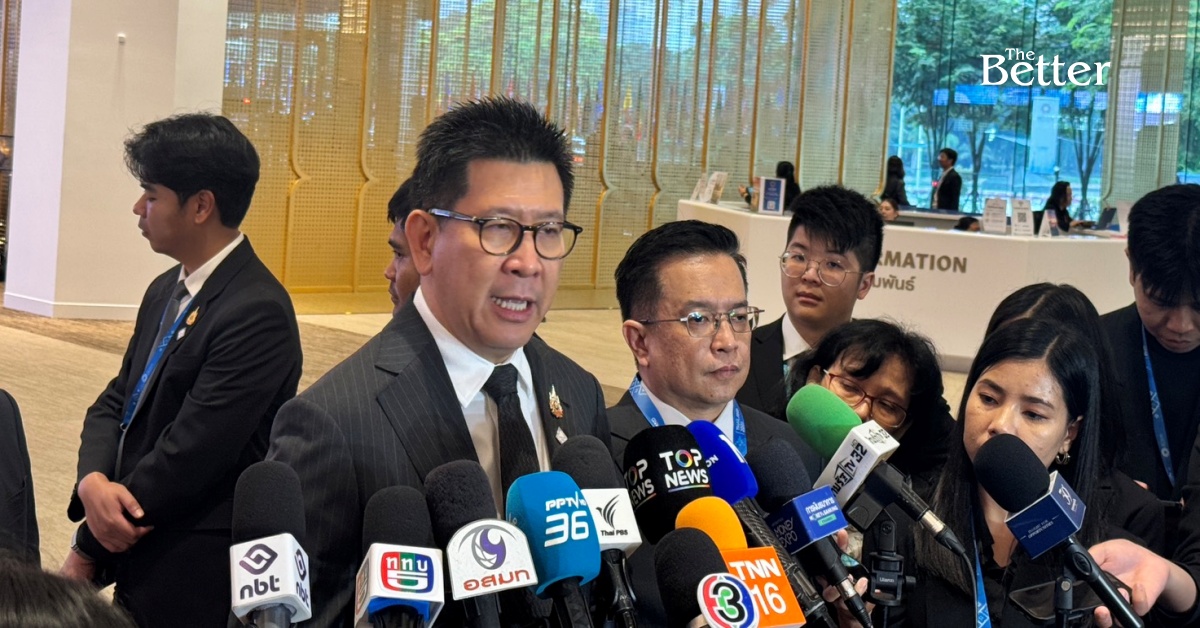
Minister of Finance Maps Post-IMF Economic Agenda, Targeting Financial Hub Status and Reform Finance Ministry
Ekniti Nitithanprapas, Deputy Prime Minister and Minister of Finance, has outlined Thailand’s economic agenda following the IMF–World Bank Group Annual Meetings hosted by Thailand, emphasizing the need to translate global financial discussions into concrete policies that strengthen the country’s economic foundations and improve people’s quality of life.
During the multi-day event, the Thai delegation held more than 50 bilateral meetings with finance ministers and central bank governors from various countries, exploring opportunities for cooperation in digital technology, infrastructure, taxation and financial market development.
In talks with India, Thailand explored cooperation in digital technology, proposing a “Small AI” model through the Nok Krasib (Whispering Bird) project. The initiative aims to help small-scale merchants track sales and improve their access to financing.
Thailand also expressed interest in adopting India’s small-scale AI applications in agriculture to help Thai farmers determine optimal planting schedules and fertilizer use. These initiatives reflect the concept of “Small AI, Better Jobs,” which seeks to enhance workforce capabilities, improve productivity and increase incomes through practical AI applications. The approach is also supported by the World Bank.
The government also consulted with the World Bank and the Asian Development Bank (ADB) on improving water management and developing early-warning systems for disasters in the Chao Phraya and Pa Sak river basins.
The initiative aims to address the underlying causes of recurring disasters and reduce the long-term fiscal burden of relief spending. The World Bank has indicated its readiness to provide funding for project feasibility studies.
In addition, Thailand signed an agreement with the ADB to secure funding for hospital development, supporting preparations for an ageing society and the transition toward greener, more sustainable healthcare facilities under the “Green Hospital” concept.
On international taxation, Ekniti noted that Thailand had signed a double taxation agreement with Norway, aimed at reducing unfair tax burdens and facilitating trade and investment links with Europe.
Thailand has also partnered with Luxembourg to draw on its expertise in developing money and capital markets, supporting the country’s ambition to become a regional financial hub.
Another proposal is to convene an ASEAN–Europe Finance Ministers’ Meeting to strengthen sustainable economic ties between the two regions. Many of these initiatives will be advanced through working groups involving both the public and private sectors, with the aim of carrying the discussions forward to the World Economic Forum in Davos, Switzerland, early next year.
Addressing fiscal stability, Ekniti said the IMF had warned countries to remain vigilant about rising public debt, with debt levels in many Western economies approaching 100% of GDP. Thailand’s public debt, by comparison, remains slightly above 60% of GDP, reflecting the country’s commitment to fiscal discipline and helping sustain investor confidence.
He noted that yields on Thailand’s 10-year government bonds stood at approximately 2%, significantly below the more than 5% yield on comparable US Treasury bonds.
Nevertheless, the Ministry of Finance is preparing structural fiscal reforms to create greater fiscal space. Priorities include accelerating reductions in redundant recurring expenditure, using digital technology and artificial intelligence to improve tax collection, and broadening the tax base by bringing more people and businesses into the tax system.
The ministry also aims to strengthen tax compliance among foreign businesses and e-commerce platforms operating in Thailand to ensure fair competition and a more level playing field for domestic enterprises.
Ekniti also thanked the Thai public, the media and the entire organizing team for their contributions to hosting the IMF–World Bank meetings, which attracted nearly 20,000 participants from 191 countries—a record for the event, according to the figures cited.
The gathering, often described as the “Olympics of Finance,” showcased Thailand’s capacity to host a major international event and earned recognition from international participants and leaders.
Beyond the formal meetings, Thailand presented its cultural heritage, cuisine, Muay Thai and products from more than 30 local communities to an international audience.
Ekniti said the collective effort demonstrated the potential of Thai people to work together on the global stage, helping restore international attention to Thailand and highlighting the country’s strengths beyond its economic and financial sectors.
The Better News English