
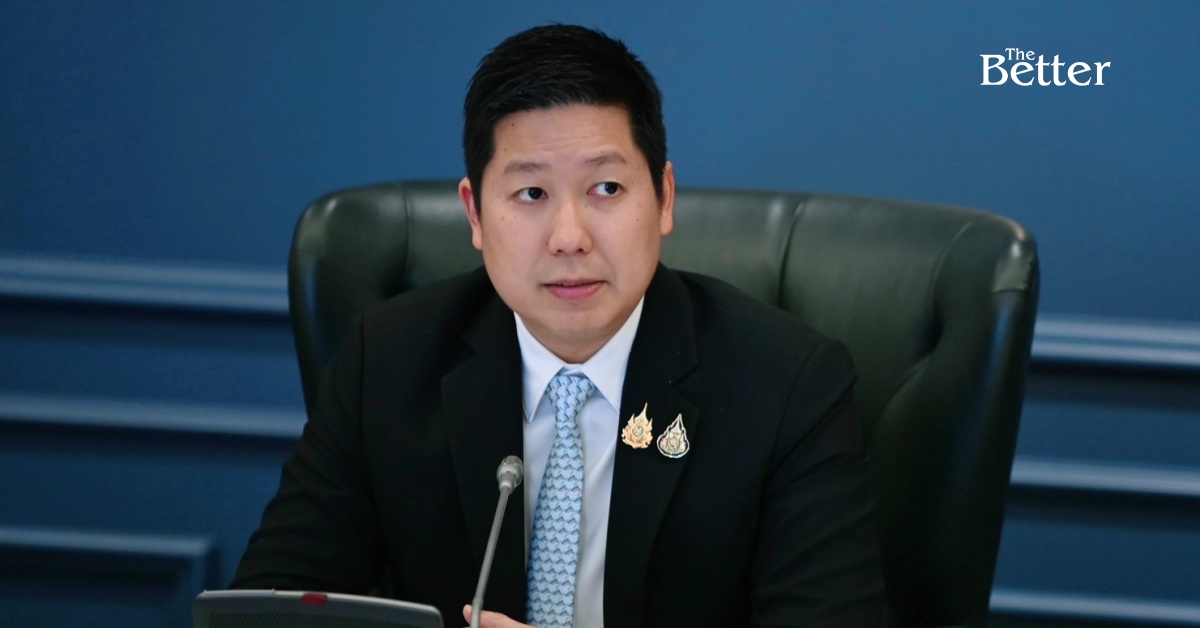
“Vorawong” expresses concern that the Thailand-UAE FTA could result in “losses outweighing gains” and harm the petrochemical industry, warning against using the FTA as a political tool during the cens
Vorawong Ramangkura, a former assistant to the Minister of Commerce, has raised concerns over the outcome of negotiations for the Thailand–United Arab Emirates (UAE) Free Trade Agreement (FTA), warning that the potential economic costs could outweigh the anticipated benefits.
His remarks followed an announcement on October 8, 2026, by Suphajee Suthumpun, Deputy Prime Minister and Minister of Commerce, that negotiations had concluded. The agreement is now undergoing a legal review expected to take two to three months, with signing anticipated in early 2027.
Vorawong warned that if Thailand agreed to eliminate or reduce import tariffs on polyethylene (PE) and polypropylene (PP) resins from the UAE, the country's upstream petrochemical industry could face severe consequences.
Costs Could Outweigh Benefits, Putting Major Businesses at Risk
Vorawong cited a study by the Department of Trade Negotiations estimating that the Thailand-UAE FTA would increase Thailand's economic output by just 0.08–0.09%, equivalent to approximately 11–12.5 billion baht.
By comparison, Thailand's petrochemical industry generates annual revenue of around 836 billion baht, equivalent to 5–6% of GDP. The sector has attracted cumulative investment exceeding 1.25 trillion baht and directly employs approximately 54,000 people.
"When negotiating a free trade agreement, we must weigh the benefits against the costs. If the agreement delivers less than 0.1% in additional GDP growth while putting an industry that accounts for 5–6% of GDP at risk, the trade-off is not worthwhile," Vorawong said.
"If the costs to Thailand outweigh the benefits, the country should not accept the agreement," he added.
Upstream Petrochemical Producers Face Direct Threat
Vorawong explained that PE and PP resins are fundamental raw materials at the beginning of the plastics supply chain, making them critical to the downstream petrochemical industry.
Thailand has annual production capacity of approximately 4.5 million tonnes of PE and 2.7 million tonnes of PP. Together, these products account for more than half of the country's total downstream petrochemical capacity, with approximately half of domestic output exported. Producers are also a key part of the industrial ecosystem in Thailand's Eastern region.
A study by the Petroleum Institute of Thailand (PTIT) indicates that petrochemical producers in the Gulf states enjoy substantially lower production costs than their Thai counterparts. Their competitive advantage stems from abundant domestic oil and gas resources, large-scale modern production facilities, and relatively low domestic consumption. According to the study, only 10–15% of their production is consumed domestically, with the remainder destined for export.
"Although Thailand currently imposes import tariffs on PE and PP resins, imports from the Gulf states already account for one-third of our total imports, contributing to an average annual trade deficit of around 10 billion baht in this product segment," Vorawong said.
"If these tariff barriers were removed, Thai upstream producers could immediately lose domestic market share. Any contraction in upstream production capacity would have knock-on effects on employment, investment and investor confidence throughout the Eastern region," he warned.
Previous Government Held Firm on PE and PP
Vorawong said that under the administration of former prime minister Paetongtarn Shinawatra, when Pichai Naripthaphan served as Minister of Commerce, negotiations on the Thailand-UAE FTA had reached agreement on all issues except those concerning PE and PP products.
The government at the time therefore refrained from rushing to finalise the agreement, citing concerns over the potential impact on Thailand's petrochemical industry.
"We were ready to conclude the agreement at the time. The only outstanding issues concerned PE and PP, on which we refused to make concessions because the costs outweighed the benefits," Vorawong said.
"Now that the government has announced the conclusion of negotiations, it must clearly explain to the public and business operators how it intends to address the potential impact," he added.
FTA Should Not Become a Political Tool
Vorawong also questioned the timing of the announcement, noting that it was made on the same day the opposition coalition submitted a no-confidence motion against the prime minister and 18 other ministers to the Speaker of the House of Representatives.
He argued that trade agreements have long-term implications for the country's economic structure and should not be rushed or presented as political achievements at the expense of domestic industries.
"Free trade agreements have long-term binding implications for the country. They should not be used as political tools or rushed to completion simply to showcase an achievement while the government is facing a no-confidence debate," Vorawong said.
"Rushing to conclude negotiations to claim political credit while leaving the country's industries and workers to bear the consequences would mean sacrificing long-term national interests for short-term political gain," he added.
Calls for Transparency Before Signing
Vorawong said the two-to-three-month legal review period before the agreement is signed represents a final opportunity for the government to clarify the potential consequences of the deal.
He called on the government to release its impact assessment for the downstream petrochemical industry and make a transparent comparison between the potential costs to domestic producers and the projected economic benefits of the agreement.
"I do not oppose free trade with the UAE. The Middle Eastern market presents genuine opportunities for Thai products. However, negotiations must not sacrifice a strategically important domestic industry in exchange for marginal economic gains," Vorawong said.
The Better News English