
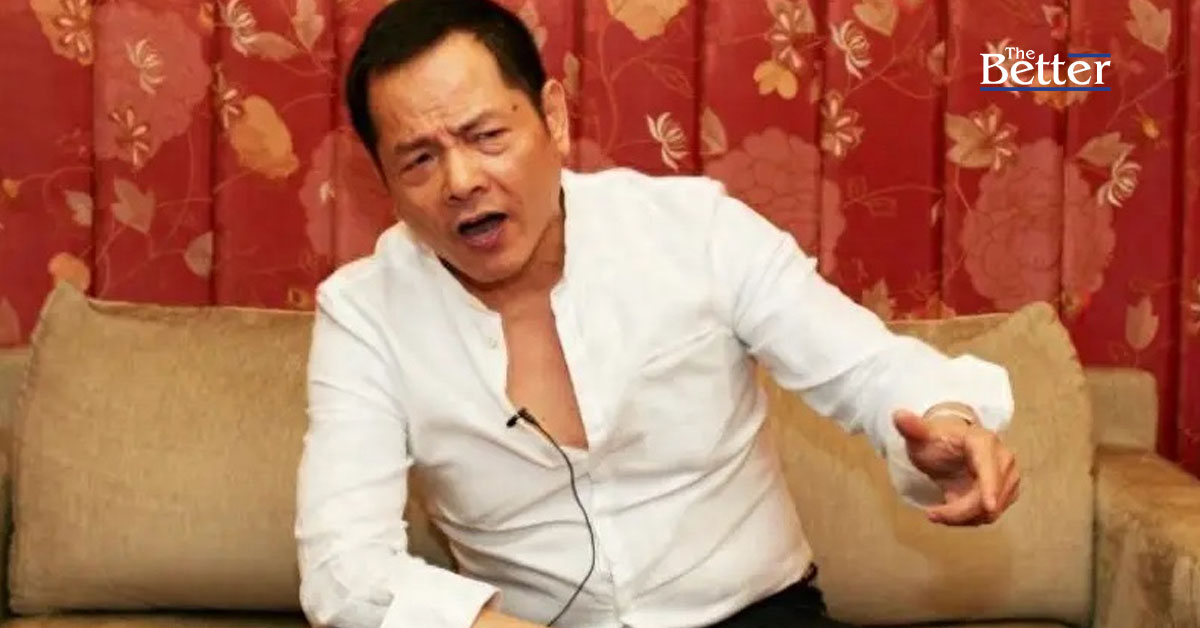
Myawaddy’s Shadow Boss? Tracing Broken Tooth Koi’s Triad Network from Macau to Myanmar
Beyond She Zhijiang—a well-known figure often dubbed a "godfather" of the Chinese "grey-market" underworld in Myawaddy—there are several other powerful figures operating illicit and grey-market businesses in the area. One such figure is Wan Kuok Koi (尹国驹 also known as Yin Guoju), the leader of the Macau branch of the 14K triad.
At the height of his power, Wan Kuok Koi wielded more influence than the Governor of Macau. Time magazine dubbed him the "last godfather of Macau" due to his prominent role in the territory during the 1990s, leading up to its handover to China. In 2020, he was designated for sanctions by the United States.
Wan Kuok Koi was born in a slum in the Ilha Verde district of northwestern Macau. The eldest of five siblings, he was the son of a waterworks employee and a match factory worker.
He dropped out of school at the age of ten to earn a living, working in restaurants to support his family. By fifteen, he and a few friends had started a movie ticket resale business, which enabled him to buy a motorcycle at sixteen. He was known in his youth for his arrogant demeanor and a penchant for challenging others to races; however, he once suffered an accident while practicing his riding, resulting in a broken front tooth. Consequently, his friends jokingly nicknamed him "Broken Tooth"—a moniker that stuck with him to this day: "Broken Tooth Koi" (崩牙驹).
He possessed the temperament of a gangster from a young age and eventually rose through the ranks of the underworld to become known as "Brother Koi" (驹哥).
His journey into the criminal world began in the 1980s when he officially joined a gang after meeting "Blackie Wah" (Hei ZiHua/黑仔华), a leader within the 14K triad.
Blackie Wah—also known as Chen Hua—was renowned in the underworld as one of the "Four Heavenly Kings" of the 14K gang, holding the highest status among them. His position and success within the organization stemmed from his keen insight into market trends and his investment vision, particularly regarding the gambling industry.
How did Wan Kuok-koi (Yin Guoju) come to meet Blackie Wah? It is said that Wan was running three street stalls to make a living near one of Macau's most famous landmarks: the Ruins of St. Paul's.
However, Wan's small-scale business encroached upon territory controlled by Blackie Wah, and he failed to show the proper respect to the 14K boss—a serious transgression in the world of gangsters. The offense was serious enough to warrant the death penalty. Initially, Hei Zihua intended to teach Yin Guoju a lesson, but upon meeting him, he recognized a certain "boss-like" quality in the young man; instead of punishing him, he took Yin Guo-ju on as both a subordinate and a protégé.
Yin Guo-ju became Hei Zihua’s favorite disciple, a relationship that paved the way for him to reach the pinnacle of his life.
Deeply grateful, Yin Guoju vowed to repay Hei Zi-hua once he became wealthy. However, his boss dismissed the idea, saying, "What’s the point of repaying favors? If you run into trouble in the future, just make sure you don't come running to me!"
Hei Zihua did not actually believe Yin Guoju would ever become rich, yet he saw the potential for the young man to become a powerful underworld boss.
Initially, Yin Guoju was responsible only for handling stolen goods and theft. Later, he rose to become the leader of a powerful criminal organization by engaging in high-interest loan sharking within casinos and branching out into the real estate industry.
By the 1990s, Yin Guoju’s power had grown immensely, seriously threatening regional stability as his gang clashed with rival criminal groups over control of casino territories. Macau police issued an arrest warrant for him, and an international warrant was subsequently issued via Interpol. However, the arrest warrant was revoked shortly after its issuance, indicating that Wan Kuok-koi and his backers were truly formidable figures.
Yet, he was not infallible. In May 1998, the car belonging to António Francisco Marques Baptista—the director of the Judiciary Police under the Portuguese administration of Macau—was targeted in a bombing. Wan Kuok-koi was implicated in the incident and arrested the following day on charges involving gang warfare, bloodshed, shootings, and intimidation.
In 1999, a Macau court found Wan Kuok-koi guilty of offenses including participation in a criminal organization, illegal lending, money laundering, weapons possession, and illegal gambling; he was sentenced to 15 years in prison. Following an appeal, his sentence was reduced to 13 years and 10 months, and he was held in a high-security, isolated unit within the Macau prison system (formerly known as Coloane Prison).
Wan Kuok-koi was released from prison on December 1, 2012. Since then, he has maintained a low profile while operating as a businessman in Southeast Asia. However, not every country in the region welcomed him; on December 23, 2013, Wan Kuok-koi and his associates traveled to Singapore to visit the U.S.-funded Marina Bay Sands complex. Upon their arrival at Singapore's Changi International Airport, they were denied entry by the Immigration and Checkpoints Authority and sent back to Macau.
While Singapore did not welcome him, Cambodia did. On May 20, 2018, Yin Guoju hosted the 2018 'Hongmen' (洪门) conference in Phnom Penh, Cambodia. There, he announced the establishment of the headquarters for the World Hongmen History and Culture Association and the launch of a digital currency known as "Hongbi" (Hongmen Coin)—with a total supply of one billion coins—on behalf of the Hongmen organization.
In this context, "Hongmen" refers to the same entity as "Ang Yi" (อั้งยี่ or 红字)—secret societies established during the Qing Dynasty that operated primarily in southern China, particularly in Fujian and Guangdong (historians sometimes use "Hongmen" as a collective term for all anti-Qing secret societies). Hongmen evolved into various underground organizations or secret societies under different names and spread to Southeast Asia alongside the wave of Chinese migration to the region.
Originally, Hongmen aimed to overthrow the Qing Dynasty and instigate a revolution in China; consequently, many of its members played pivotal roles in the Chinese revolutionary movement. However, some of these secret societies later morphed into criminal gangs—known as "Triads"—operating in the underworld through illicit businesses.
For instance, the 14K gang is also known as San He Hui (三合会), a name linked to the original anti-Qing secret groups, namely the Tiandihui (天地会) and Hongmen.
This illustrates how Yin Guoju utilized the historical legacy of these secret societies as a cover for his operations in Southeast Asia. He began by establishing a stronghold in Cambodia, capitalizing on the influx of Chinese nationals who had arrived there to engage in online fraud and illegal gambling. This led to Cambodia becoming one of the first major hubs for "grey-market Chinese" operations in mainland Southeast Asia.
Later, facing pressure from authorities to crack down on these activities, these operators—including Yin Guoju—relocated to Myanmar. This move coincided with the exploitation of the Chinese government's "Belt and Road Initiative" by grey-market Chinese capital groups to develop business zones in Myawaddy, Karen State, Myanmar. Figures like She Zhijiang used the initiative as a cover for their operations, successfully persuading the Myanmar government—which was eager to attract investment—to go along with the plans, unaware that these were actually fronts for illicit grey-market Chinese businesses.
Yin Guoju similarly used the Belt and Road Initiative as a smokescreen to establish illegal casino projects in Myanmar. He secured land and resources through collaborations with local military factions and generated profits via unlawful means. Investigations by Deutsche Welle journalists revealed that Yin Guoju was the mastermind behind telecommunications fraud syndicates in northern Myanmar and the true controller of "KK Park," as well as the figure behind other grey-market Chinese business zones.
According to international media reports, Yin Guoju played a pivotal role in pioneering a new type of online fraud known as "pig butchering" (杀猪盘). This scam targets wealthy yet lonely individuals, luring them into fraudulent schemes. This type of scam is known as "pig butchering" because fraudsters "fatten up" the victim by building a relationship—luring them in until they become a "fat pig"—before finally "slaughtering" them by swindling them out of their money. Initially, the scam targeted only Chinese nationals, but tens of thousands of people worldwide have since fallen victim to it.
Many Chinese victims who managed to escape Myawaddy—often after paying ransoms ranging from 200,000 to 300,000 yuan—have identified the perpetrators as the "Dongmei Group" (东美集团).
Who owns the Dongmei Group? Looking back a few years, photographs remain showing Yin Guoju standing at the center during the group's opening ceremony in Myanmar. In February 2020, he appeared in photos at the ribbon-cutting ceremony for the Saixigang Industrial Park (赛西港产业园区) in Myanmar, flanked by uniformed ethnic minority soldiers. The Saixigang Industrial Park was later renamed the Dongmei Industrial Park.
Consequently, "no one believes he isn't the boss." Influencers covering "grey-area" Chinese activities in Myanmar—such as the Chinese influencer known as "Miandian Haibo" (缅甸海波)—have stated that "Yin Guoju is the executive behind the Dongmei Industrial Park in Myawaddy." ...Myanmar.”
However, Wan Kuok-koi did not remain silent. He responded to 'Miandian Haibo' by acknowledging that he was indeed a boss in Myawaddy, but denied any involvement with the "grey-market" Chinese enclaves in Cambodia and Myanmar, threatening legal action against the allegations.
Yet, his assertions face scrutiny against information from various other sources. For instance, the U.S. Department of the Treasury imposed sanctions on Wan Kuok-koi’s companies in 2020 on charges of corruption. Furthermore, the Treasury added entities alleged to be owned or controlled by his companies—including the Dongmei Group in Myawaddy—to the sanctions list.
Additionally, United Nations officials and researchers believe that thousands of people have been trafficked to the Dongmei business complex and forced to participate in online scams. Investigators state that victims were lured to the complex with promises of legitimate employment; however, once inside, they were compelled to surrender their passports and adopt fake social media identities to carry out scams.
Wan Kuok-koi has openly denied involvement in illegal activities following the imposition of U.S. sanctions. He posted a video on social media asserting that his Hongmen Association operates in compliance with the law. Furthermore, a post on WeChat—purportedly from the official account of the Hongmen Association—stated that Yin Guoju had "stepped away from the underworld" and was now engaged in legitimate business.
Nevertheless, he is still viewed as an underworld kingpin—not merely in Macau, but as a major boss across Southeast Asia.
The Better News English