
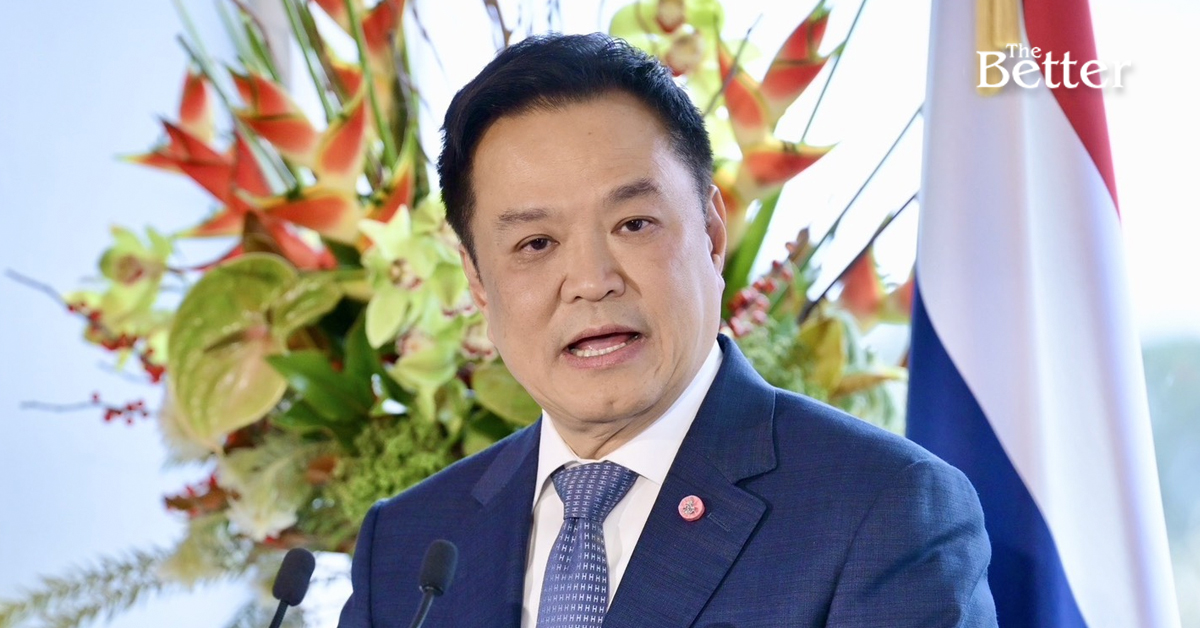
Prime Minister and Interior Minister Anutin Charnvirakul has reaffirmed the Thai government's commitment to maintaining strong ties with Japanese investors, emphasizing that Japan has long been a key source of investment and an important pillar of Thailand's industrial sector.
Speaking during his official visit to Australia and New Zealand, Anutin said the government values investors from all countries, particularly Japanese companies that have established Thailand as a major production base over several decades.
He said the government is prepared to address obstacles facing existing investors and adjust regulations and conditions where necessary to facilitate business operations, maintain investor confidence and support long-term economic growth.
“The government’s main policy is to be open and willing to adjust various conditions to facilitate business operations, under good relations, to achieve sustainable growth and emphasize long-term economic development cooperation to maintain Japan’s strong production base in Thailand,” Anutin said.
Government Prioritizes Automotive Industry
Anutin said the government is placing particular emphasis on the automotive industry, where Thailand has developed extensive supply-chain links with Japanese manufacturers. These include the production of engines, vehicle bodies, chassis and other automotive systems in Thailand.
He stressed the importance of preserving existing production bases while helping the industry adapt to emerging automotive technologies.
“Japanese investors have been among the top investors in Thailand for a very long time, to the point where it’s impossible to distinguish between Thailand and Japan when it comes to using Thailand as a production base,” Anutin said.
“We are ready to resolve any obstacles to assure them that we have not abandoned them. It’s not about giving them everything they want only to impose conditions later when they are doing well,” he added.
EV Transition and Investment Conditions
Regarding the electric vehicle (EV) industry, Anutin said he had assigned Deputy Prime Minister and Finance Minister Ekniti Nitithanprapas to explore measures to support investors from different countries and review the structure of existing investment incentives.
The review aims to ensure that traditional automotive manufacturers are not placed at a disadvantage by differing investment conditions as Thailand transitions from internal combustion engine vehicles to EVs.
Anutin said the government plans to restructure relevant policies to ensure fair competition among manufacturers, maintain investor confidence and support the country's automotive industry during the transition.
He also acknowledged that EV manufacturers may initially rely heavily on imported components. However, he expects a domestic supply chain to gradually develop, including production of batteries, computer systems and other components, creating new opportunities for local investment and manufacturing.
Foreign Investment Remains Strong
Anutin also pointed to foreign investment figures as evidence that Thailand remains an attractive investment destination, saying there were currently no clear signs of a slowdown in foreign investment or a large-scale relocation of production bases from the country.
Foreign investment exceeded THB 1 trillion last year, while actual investment in the first half of this year had already reached approximately THB 530 billion, he said.
“We must focus on the figures. Since this government came into power, foreign investment in Thailand has increased significantly. Last year, it exceeded 1 trillion baht. In the first half of this year, actual investment has already reached 530 billion baht,” Anutin said.
“Therefore, we haven't seen any relocation of production bases or a halt in foreign investment due to claims that Thailand is not ready,” he added.
The government has pledged to balance the preservation of Thailand's established industrial bases with the development of emerging industries, particularly EVs, while maintaining political and economic stability to attract and retain long-term investment.
The approach is intended to ensure that Thailand remains a competitive production base for Japanese manufacturers while also attracting investment from companies from other countries as the country's industrial structure evolves.
The Better News English