
Seven strategic industries, backed by a proposed 5.37 trillion baht in additional revenue by 2030, form the centrepiece of a public-private sector initiative to move Thailand towards higher-value manufacturing, digital infrastructure, innovation and intellectual property.
Thailand is preparing for a major economic restructuring, seeking to move beyond its traditional dependence on manufacturing, tourism, agriculture and domestic consumption towards a more diversified, technology-driven and innovation-based economy. At the heart of this ambition is the government's Reinvent Thailand initiative, a public-private sector strategy that seeks to generate more than 5.4 trillion baht in additional revenue by 2030 through the transformation of seven strategic industries.
The initiative reflects a growing recognition that Thailand's traditional economic growth model is losing momentum and that the country must develop new sources of competitiveness if it is to avoid falling behind regional rivals. Rather than relying exclusively on foreign investment, low-cost manufacturing or mass tourism, the proposed strategy seeks to strengthen domestic production capabilities, integrate Thai businesses into global supply chains, develop new technologies, and turn the country's cultural and industrial assets into higher-value economic activities.
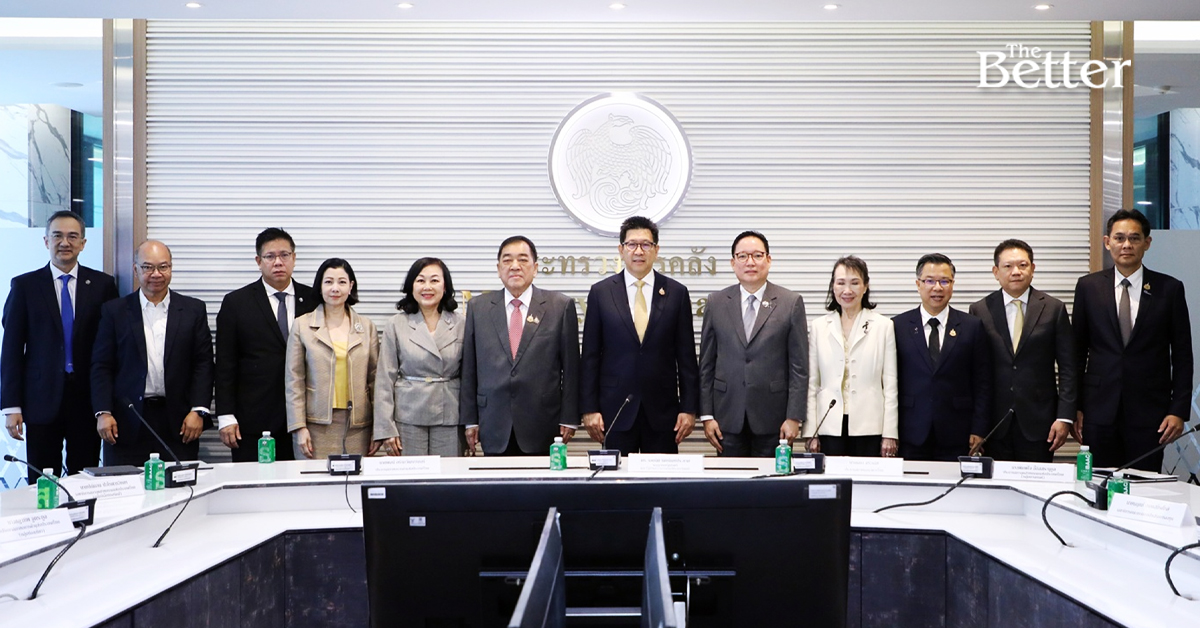
The blueprint was discussed on November 9, 2026, when Ekniti Nitithanprapas, Deputy Prime Minister and Finance Minister, chaired a meeting with the Joint Standing Committee on Commerce, Industry and Banking (JSCCIB) and representatives of seven industrial groups. The meeting was designed to consolidate proposals from the private sector and align them with the four subcommittees under the Joint Public and Private Sector Consultative Committee (JPPCC), which is chaired by the Prime Minister.
Narit Therdsteerasukdi, Secretary-General of the Thailand Board of Investment (BOI), who serves as a member and secretary of the Subcommittee on New Investment Development, said the proposals would be developed into a national-level operational plan before being submitted to the full JPPCC.
The seven industrial groups have identified a combined additional revenue target of approximately 5.37 trillion baht by 2030, comprising 1.1 trillion baht from medical and healthcare, 970 billion baht from the creative economy, 860 billion baht from agriculture and processed food, 800 billion baht from retail and commerce, 640 billion baht from automotive, and 500 billion baht each from smart electronics and tourism.
The broader national ambitions are equally significant: achieving annual economic growth exceeding 3%, increasing the investment-to-GDP ratio to 30%, and moving Thailand into the world's top 20 most competitive economies by 2030.
A new economic model: From investment attraction to domestic value creation
The significance of Reinvent Thailand lies in its attempt to connect industries that have traditionally been developed through separate policy initiatives into a coordinated national economic strategy.
For years, Thailand's investment promotion strategy has relied heavily on its manufacturing base, geographical position, industrial estates and established supply chains. These remain important advantages, but the next phase of competition will increasingly be determined by technological capabilities, productivity, skilled labour, intellectual property and the ability to develop products with higher domestic value-added content.
The World Bank's September 2026 report, Building Thailand's Future Today, provides an important framework for understanding this challenge. It argues that Thailand must accelerate productivity growth by upgrading businesses, adopting technology, improving workforce skills, strengthening innovation and creating more competitive domestic firms.
The report identifies advanced manufacturing, sustainable and wellness tourism, digital services, agrifood and creative industries as areas where Thailand has comparative advantages and opportunities to generate better-quality employment. It also stresses the importance of enabling SMEs and startups to expand, strengthening secondary cities and ensuring that foreign investment generates greater benefits for domestic businesses.
This is broadly consistent with the objectives of Reinvent Thailand. The challenge, however, will be to translate the private sector's ambitious revenue targets into actual investment, productivity gains, exports and better-paying jobs.
1. Smart electronics: Turning the AI and data-centre boom into an industrial opportunity
One of the most strategically important elements of the plan is the transformation of Thailand's smart electronics industry to capture opportunities created by artificial intelligence, cloud computing and data-centre expansion.
Thailand is already attracting substantial investment in digital infrastructure. According to the BOI, investment promotion applications in the digital sector reached approximately 746.2 billion baht across 151 projects in 2025, driven largely by major data-centre and digital infrastructure developments.
The momentum continued into 2026. BOI figures showed that investment applications in the first half of the year reached approximately 1.47 trillion baht across 1,299 projects, with the digital sector accounting for approximately 1.12 trillion baht.
PwC Thailand's November 3 assessment further highlighted the scale of the opportunity. Citing BOI figures, PwC reported that Thailand recorded 36 data-centre investment projects worth a combined 728 billion baht in 2025. Its analysis, based on the Global Data Centre Outlook 2026–50 developed with Oxford Economics, projects cumulative data-centre capital expenditure in Thailand could reach approximately US$150 billion, or 5.06 trillion baht, by 2050.
These developments suggest that Thailand could become more than a location for hosting foreign-owned data centres. The next objective is to develop a domestic ecosystem supplying the equipment, components, electronics, power-management systems and other technologies required by the digital economy.
Under Reinvent Thailand, the smart electronics sector aims to generate an additional 500 billion baht by 2030 through four priorities.
First, Thailand intends to increase domestic production of key AI and data-centre components and equipment, targeting at least 50% local production while further developing its established hard-disk drive and data-storage industries.
Second, the country seeks to advance grid modernisation, targeting at least 70% domestic production of power-distribution equipment, with the three state-owned electricity utilities serving as initial customers.
Third, Thailand wants to become a testing and co-development centre, encouraging international companies to work with local manufacturers to develop, test and produce at least three new products domestically.
Finally, the industry intends to create a market for smart and energy-efficient appliances through green trade-in programmes, digital product passports and improved end-of-life waste management.
However, the expansion of data centres also raises questions about energy security, water consumption and environmental sustainability. PwC has warned that infrastructure planning must balance the requirements of digital investment with the needs of local communities, agriculture and other industries.
This is particularly important in the Eastern Economic Corridor, where industrial development and large-scale digital infrastructure will compete for electricity, water and land.
Thailand's opportunity therefore lies not simply in attracting data-centre investment, but in ensuring that these projects stimulate domestic manufacturing, technology transfer, local employment and the development of a competitive digital supply chain.
2. Automotive: Protecting Thailand's manufacturing base during the global EV transition
The automotive industry represents another critical component of the restructuring strategy.
Thailand has long been one of Southeast Asia's most important automotive production centres, supported by Japanese manufacturers, a mature network of suppliers and extensive manufacturing capabilities. However, the global transition towards electric vehicles has disrupted traditional supply chains and intensified competition from China and other emerging manufacturing centres.
The Reinvent Thailand proposal aims to generate an additional 640 billion baht in automotive revenue by 2030, with production targets of 1.95 million vehicles by 2030 and 2.5 million by 2038.
The strategy is not limited to battery electric vehicles. Instead, it promotes a multi-powertrain approach encompassing different electric vehicle technologies, including BEVs and other electrified vehicles, while maintaining the country's capabilities in conventional automotive manufacturing.
A major priority is to encourage new original equipment manufacturers to establish production operations in Thailand, attract new EV models and increase the use of domestically manufactured components.
The development of E-Parts, including electric powertrains, batteries and other EV-related components, is intended to help Thai suppliers participate in the next generation of automotive supply chains.
This direction is consistent with the Federation of Thai Industries' recent position on automotive policy. On November 3, the FTI supported the government's decision to increase the excise tax on imported completely built-up BEV and range-extended EV models to 35%, effective January 1, 2027. The measure is intended to encourage manufacturers to establish production bases in Thailand rather than rely exclusively on imported vehicles.
The automotive group's proposal also introduces a circular-economy dimension, focusing on the management and recycling of vehicles, batteries and electronic components.
The fundamental challenge is to ensure that Thailand does not become merely an assembly location for foreign EV brands. Increasing local content, developing Thai suppliers and attracting technology-intensive investment will determine whether the country can retain its position as a regional automotive manufacturing hub.
3. Agriculture and food: Moving from commodity exports to premium products
Agriculture and food processing remain essential to Thailand's economic structure, but the sector faces persistent challenges involving productivity, production costs, land constraints, climate risks and international competition.
The proposed strategy seeks to generate an additional 860 billion baht by 2030 by moving beyond the traditional model of exporting agricultural commodities towards higher-value food products and premium agricultural goods.
The programme is built around three priorities: New Productivity, New Premium and New Horizons.
New Productivity focuses on improving efficiency, reducing production costs and introducing technologies to increase agricultural yields.
New Premium aims to upgrade Thai agricultural and food products through quality improvements, branding, processing and access to higher-value international markets.
New Horizons seeks to develop new industries and high-value products while addressing land-use constraints and infrastructure bottlenecks that discourage investment.
This transition is particularly important as Thailand faces competition from countries with lower production costs and increasingly sophisticated agricultural technologies.
The opportunity is to combine Thailand's established strengths in food production with biotechnology, food innovation, agricultural automation, advanced processing and international branding.
Rather than competing solely on production volume, Thailand must increasingly compete through product quality, food safety, traceability and value-added processing.
4. Tourism: Building a network of destinations rather than relying on major cities
Tourism remains one of Thailand's most recognisable international strengths, but the proposed restructuring seeks to move the industry towards higher-value tourism and a more geographically balanced development model.
The private sector aims to generate an additional 500 billion baht in annual revenue by 2030 by positioning Thailand as a global living destination.
The plan includes establishing a Tourism Intelligence Platform to integrate tourism information, improve coordination and strengthen international communications.
A second priority is developing interconnected tourism clusters that link major destinations with secondary cities through festivals, international events, transport networks and regional tourism routes.
The initiative also proposes developing a Thailand Cruise Hub to capture opportunities in the expanding cruise tourism market.
Five pilot areas have been identified: Bangkok, the Eastern Economic Corridor, Phuket, Chiang Mai and Nakhon Ratchasima (Korat). These locations are intended to become more attractive places to live, visit and invest, supported by improved urban infrastructure and a one-stop visa service system.
The strategy is consistent with the Tourism Authority of Thailand's 2027 direction, which seeks to reposition the country as a high-value and meaningful destination. The TAT has outlined a target of at least 5% tourism revenue growth and a 60:40 distribution of visitors between major and emerging destinations.
The longer-term objective is to reduce dependence on a limited number of established tourism centres while allowing local businesses, SMEs and communities to capture a greater share of tourism expenditure.
5. Healthcare and wellness: Turning Thailand's medical reputation into a global export industry
Healthcare and wellness represent the largest individual revenue target under Reinvent Thailand, with the private sector seeking to generate an additional 1.1 trillion baht by 2030.
Thailand already has an established international reputation in medical services, hospitals, wellness tourism and traditional medicine. The strategy seeks to turn these capabilities into a broader export industry.
The first priority is expanding medical and wellness services to international markets, with a target of at least 100 billion baht in annual revenue from international patients.
The second is promoting Thai-made medicines, herbal products and other high-value healthcare goods. The proposal includes increasing the government's procurement share of domestically manufactured medicines from 30% to 50%, while targeting annual pharmaceutical exports of 11.3 billion baht.
The third priority involves research and development, commercial innovation and human capital development to ensure that Thai healthcare professionals and institutions meet international standards.
The opportunity extends beyond medical treatment. Thailand could develop a more comprehensive wellness economy incorporating preventive healthcare, rehabilitation, elderly care, medical technology, pharmaceutical research, herbal products and long-term wellness services.
However, international competitiveness will depend on quality assurance, regulatory standards, research capabilities and the availability of specialised medical personnel.
6. Retail and commerce: Creating globally competitive Thai brands
The retail and commerce sector aims to generate a cumulative additional revenue target of 800 billion baht by 2030, including an annual revenue contribution of 200 billion baht from the sale of Thai products.
The proposal focuses on three strategies: Fair Game, Thai Brand and Spread.
Fair Game seeks to ensure that domestically manufactured and imported products meet consistent quality and safety standards, including certification requirements administered by the Thai Industrial Standards Institute and the Food and Drug Administration.
Thai Brand focuses on promoting local products through initiatives such as the Thai Gift Policy, Thai Champion, Easy E-Receipt and Showcase Stores, while expanding Thai brands into international markets.
Spread aims to improve distribution networks through logistics centres, cold-chain infrastructure and regional distribution facilities, particularly in border areas and export-oriented locations.
An important feature of this strategy is its proposed cooperation with the other six industrial groups. The retail sector is expected to act as a distribution and market-access platform, connecting Thai agricultural products, automotive components, healthcare goods and creative products with consumers at home and abroad.
The principle is that one industry should create commercial opportunities for another, rather than operating as an isolated economic sector.
7. Creative economy: Turning Thai culture, content and intellectual property into global assets
Perhaps the most significant departure from Thailand's traditional industrial-development model is the emphasis on the creative economy.
With a proposed additional revenue target of 970 billion baht by 2030, the sector is expected to transform Thai cultural assets, design capabilities, entertainment content and intellectual property into internationally competitive businesses.
The strategy focuses on two broad categories.
The first is tangible assets, particularly gems and jewellery. Thailand aims to strengthen its position as an international hub for raw materials, jewellery design, manufacturing and branding while protecting design-related intellectual property and expanding access to global markets.
The second is intangible assets, particularly creative content and intellectual property. The private sector aims to achieve average annual growth of 9% in the creative economy's gross value added by 2030.
This involves developing talent, using AI and other technologies to support international co-production, and expanding commercial opportunities across television series, dramas, films, games, performing arts and tourism.
The strategy is particularly relevant as the global entertainment and digital-content industries increasingly compete through ownership of intellectual property rather than production volume alone.
The Creative Economy Agency's 2026 strategic framework provides further context. It estimates that Thailand's creative industries generate approximately 1.44 trillion baht, equivalent to 8.01% of national GDP. Its strategy focuses on transforming cultural capital into a globally competitive creative intellectual-property economy.
The agency has also identified the importance of developing creators, creative cities, businesses and platforms, with targets that include supporting more than 300,000 creators and entrepreneurs and generating at least 350 new intellectual-property assets.
This suggests that the creative economy is not simply a cultural or tourism-related initiative. It is an attempt to build a new export industry in which Thai stories, designs, entertainment formats, brands and cultural products can generate recurring international revenue.
The implementation challenge: Turning investment into inclusive growth
Despite the scale of the ambitions, Reinvent Thailand faces a fundamental question: Can the country translate investment commitments and private-sector proposals into sustained improvements in productivity, employment and national competitiveness?
The Bank of Thailand's October 28 economic assessment projected growth of 2.4% in 2026 and 2.1% in 2027. It noted that the benefits of the global technology and AI investment cycle remain concentrated among businesses and workers in related sectors, while household debt, weak purchasing power and difficulties facing SMEs continue to constrain the broader economy.
This highlights the difference between attracting large investment projects and creating an economic transformation that benefits the wider population.
Data centres, for example, can attract billions of baht in investment but may not generate employment on the same scale as traditional manufacturing. Their wider economic contribution will depend on whether they create demand for local electronics, engineering, energy systems, cybersecurity, cloud services and skilled professionals.
Similarly, the expansion of electric vehicle manufacturing will not necessarily strengthen Thailand's industrial base unless domestic suppliers participate in the transition. Tourism growth will have limited inclusive benefits if revenue remains concentrated in major destinations, while creative industries will struggle to scale without effective intellectual-property protection, access to finance and international distribution networks.
Human capital development is therefore central to the entire programme. Thailand must develop workers capable of operating advanced manufacturing systems, managing AI applications, conducting research, producing creative content and competing in international service industries.
The government must also address infrastructure constraints, particularly electricity supply, clean energy, water management, logistics and digital connectivity. Regulatory consistency and effective coordination between government agencies will be equally important.
Ultimately, the proposed 5.37 trillion baht revenue increase should be viewed as a strategic ambition rather than a guaranteed economic outcome.
From seven industries to one national economic transformation
Reinvent Thailand represents an attempt to bring together seven industrial priorities under a single economic transformation framework.
The initiative's importance lies not only in the size of its revenue targets but also in the connections between the sectors. AI and data centres can stimulate smart electronics manufacturing. Automotive electrification can generate demand for advanced components and battery technologies. Agricultural innovation can support premium food exports. Tourism can create new markets for local products and creative content. Healthcare can expand into pharmaceutical research and wellness services, while intellectual property can turn Thai culture into globally marketable assets.
These connections could create a more diversified economy in which domestic businesses participate more actively in international value chains.
Narit said the BOI would work with the JPPCC secretariat and its four subcommittees to turn the proposals into a national action plan before submitting them to the full committee chaired by the Prime Minister.
The ultimate objective is to achieve a second take-off for the Thai economy: one driven less by low-cost production and traditional growth engines and more by technology, productivity, innovation, domestic value creation and globally competitive Thai businesses.
The real test will be whether Thailand can turn its investment appeal into technological capabilities, its cultural heritage into intellectual property, and its established industries into new sources of sustainable growth.
Thailand is not simply seeking to attract the industries of the future. It is attempting to build the domestic economic ecosystem needed to participate in them.
The Better News English