
Thailand’s Next Leap: What “Plan 14” and the “Next Agenda” Aim to Deliver
Prime Minister and Interior Minister Anutin Charnvirakul has called for Thailand’s 14th National Economic and Social Development Plan (2028–2032) to move beyond conventional policy-making and tackle the structural constraints that have limited the country’s economic and social potential.
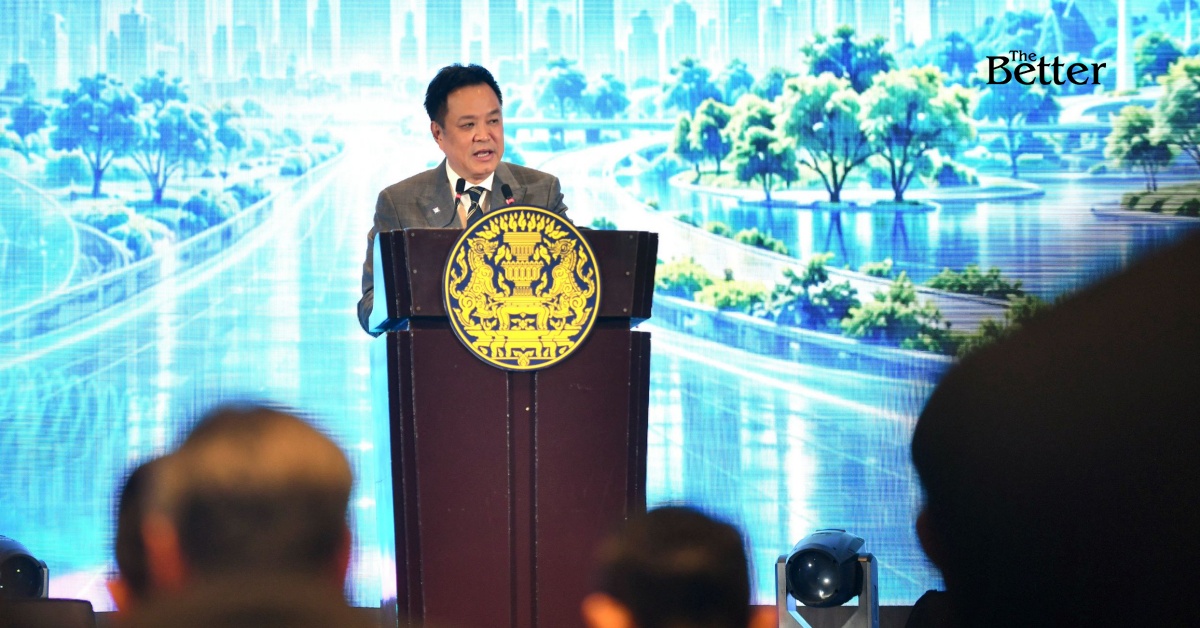
Anutin delivered the keynote address, “Plan 14: Propelling Thailand Further – Thailand’s Next Agenda,” at the 2026 Annual Conference of the Office of the National Economic and Social Development Council (NESDC). The conference brought together Cabinet members, permanent secretaries, heads of government agencies, state enterprises, business and private-sector representatives, academics, international organizations, the media, and members of the public.
The annual conference was organized to raise awareness of the substance of the draft 14th National Economic and Social Development Plan and provide a platform for government agencies and development partners to exchange views and recommendations that will help shape Thailand’s development priorities over the next five years.
At the heart of Anutin’s message was a shift in emphasis: Thailand’s next development plan should not simply define what the country wants to achieve, but identify what is preventing it from reaching its full potential.
He argued that Thailand has considerable strengths across industries, agriculture and food, services, healthcare, and tourism. Yet economic growth has historically remained below the country’s potential, constrained by weak productivity, limited access to capital and technology for small businesses, bureaucratic barriers, and regulations that can restrict economic opportunities.
At the same time, Thailand is undergoing a profound demographic transition. The working-age population is shrinking while demand for healthcare and social welfare is increasing. Technological change—particularly the rapid development of artificial intelligence—is adding another layer of transformation.
Recent heavy rains and flooding in several parts of the country, meanwhile, have highlighted another dimension of national development: resilience. For Anutin, development should ultimately be measured not only by economic indicators but also by whether people can live and earn their livelihoods safely, both under normal circumstances and during crises.
“If we persist with the same mindsets and working methods, our outcomes will decline. At a time when other nations are advancing rapidly, standing still is tantamount to moving backward.”
The central question for Plan 14, he said, should therefore be: What constraints are holding Thailand back from its full potential, and how can they be unlocked?
Anutin also pointed to an opportunity arising from the global restructuring of production and supply chains.
Thailand already possesses several attributes that can support higher-value economic activity, including its geographic position, infrastructure, energy capacity, supply chains, skilled workforce, and ability to make and implement government decisions.
The challenge is to convert those advantages into greater domestic value creation. As global companies diversify production bases and restructure their supply chains, Thailand has an opportunity to attract new investment in higher-value industries. But the Prime Minister stressed that investment should generate broader benefits for the domestic economy by connecting foreign investors with Thai businesses, facilitating technology transfer, and creating high-quality employment.
This represents a potential shift in Thailand’s traditional investment strategy—from competing primarily through relatively low labor and resource costs or tax incentives toward competing through productivity, technology, standards, creativity, and human capital.
“We will no longer compete solely on the basis of cheap labor, low-cost resources, or tax incentives. Instead, we will compete through quality, creativity, technology, standards, and the capabilities of the Thai people.”
He also highlighted Thailand’s geographic advantages and logistics infrastructure as assets that can support this transition.
The draft 14th Plan is structured around five major pillars: Economic restructuring, Public-sector reform, Human capital development, Natural resource and environmental management, Investment in, transfer of, and utilization of technology and innovation
Rather than treating these pillars as separate policy areas, Anutin argued that they must function as an integrated system with a common objective: generating greater value for Thailand and ensuring that the resulting benefits translate into higher incomes, greater opportunities, and a better quality of life.
This approach also places pressure on the public sector to change the way it operates.
Government agencies, he said, should reassess their core missions, reduce overlapping responsibilities, and create greater space for the private sector, local communities, and the public to participate in development.
The emphasis is also on moving away from fragmented problem-solving toward a more integrated, data-driven system.
“Thailand must shift from addressing problems in a piecemeal fashion to a system where data is interconnected and standardized.”
Under such an approach, agencies would need to understand not only their own responsibilities but also how their work connects with the objectives of other agencies.
For Anutin, this is particularly important when national development objectives involve issues that cut across institutional boundaries, including public safety, resource management, energy, infrastructure, investment, and environmental resilience.
As the central issue for Plan 14 will be implementation, Anutin stressed that the plan should establish clear responsible agencies, defined timeframes, measurable outcome indicators, and transparent data that can be accessed by the public. The intention is to make the plan more than a broad policy document by linking its objectives to measurable improvements in people's lives.
Among the indicators highlighted are productivity, income, workforce skills, the ease of interacting with government, energy costs, resource efficiency, and the country's ability to withstand crises.
This approach also reflects an attempt to separate long-term national development from short-term political cycles.
Anutin said the 14th Plan should not belong to any particular government or political party. Instead, it should provide a shared national direction that can be implemented continuously across changes in government and supported by different sectors of society.
The broader significance of Plan 14 lies in its attempt to address a question that has increasingly shaped Thailand’s economic debate: how can the country move from relatively mature, established industries toward a more productive, technology-intensive and resilient economic model while simultaneously managing demographic change and environmental pressures?
The answer proposed by the draft plan is not a single new industry or investment project. Rather, it is a combination of economic restructuring, government reform, human-capital development, environmental management, and technological advancement.
The desired outcome, according to Anutin, is a Thailand in which economic growth is accompanied by broader opportunities.
Workers should be able to see a promising future; Thai entrepreneurs should have room to expand; children and young people should acquire practical knowledge and skills; older people should remain valued and enjoy greater security; and the state should function as a facilitator that enables citizens to improve their quality of life and realize their potential.
Under this vision, every part of the country should become a source of opportunity and be capable of adapting to future changes.
Ultimately, Plan 14 is being framed not simply as a five-year economic plan, but as an attempt to redefine the mechanisms through which Thailand creates value, distributes opportunity, manages resources, and responds to disruption.
Its success, however, will depend less on the breadth of its five pillars than on whether those pillars can be translated into coordinated action, measurable outcomes, and sustained implementation beyond the political cycle.
The Better News English