
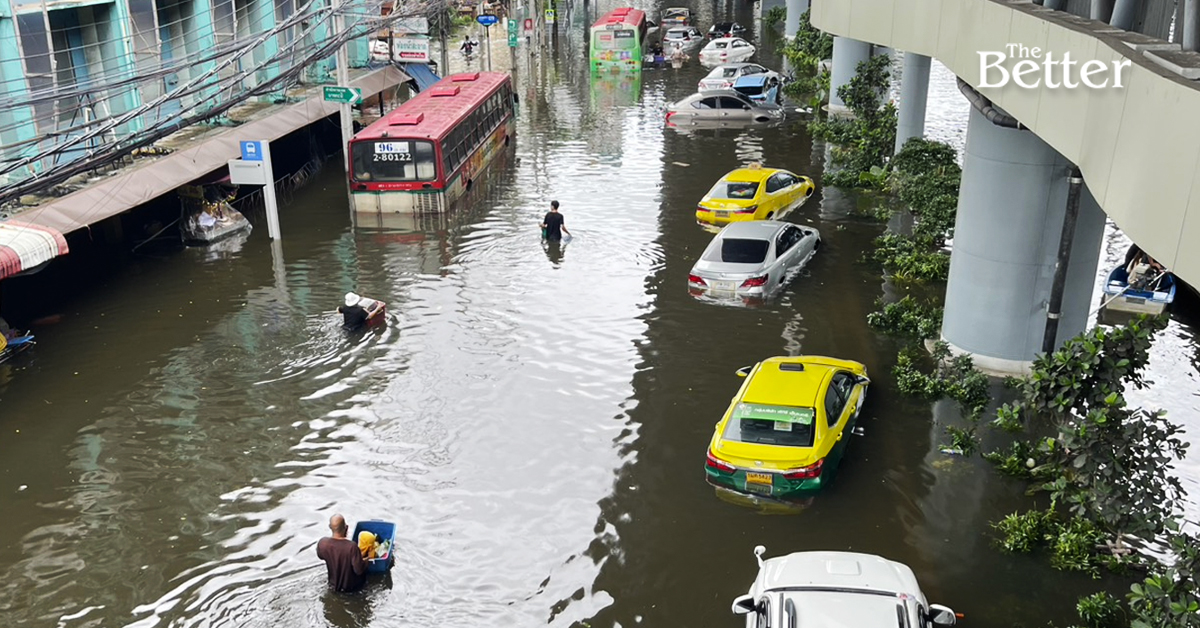
Thanavath Phonvichai, President and Chief Advisor of the Center for Economic and Business Forecasting at the University of the Thai Chamber of Commerce (UTCC), has released an assessment of the economic impact of flooding between September 25 and 29, 2026, covering Bangkok and 26 provinces.
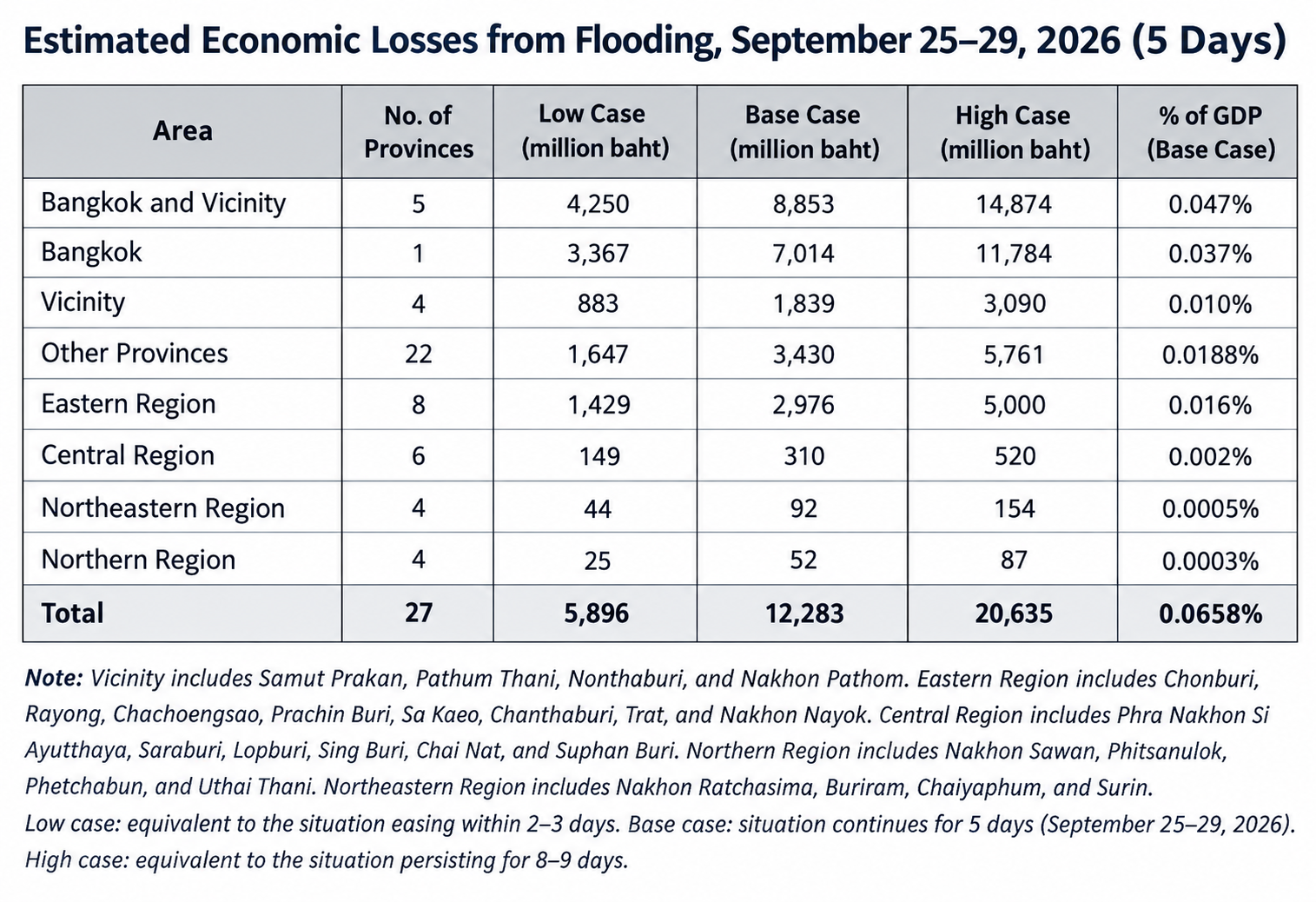
The center estimates that under its base-case scenario, the floods will cause economic losses of approximately 12.283 billion baht, equivalent to 0.066% of annual GDP. The estimated range of losses is between 5.896 billion and 20.635 billion baht, or approximately 0.03% to 0.11% of GDP.
Bangkok Bears the Largest Economic Impact
Bangkok has suffered the largest economic impact, with estimated losses of approximately 7.014 billion baht, accounting for 57% of total losses. The center attributed the significant impact to Bangkok's role as the country's economic hub and its heavy reliance on trade and service activities.
The four provinces surrounding Bangkok—Samut Prakan, Pathum Thani, Nonthaburi, and Nakhon Pathom—are estimated to have suffered combined losses of around 1.839 billion baht.
The Eastern region recorded estimated losses of approximately 2.976 billion baht, with Chonburi accounting for the largest share at around 2.101 billion baht. The impact in Chonburi was attributed largely to flooding in the Pattaya area, affecting tourism, retail, and logistics activities.
However, the center said the impact on industrial areas within the Eastern Economic Corridor (EEC) remained localized. There have been no reports of industrial estates suspending production as a result of the flooding.
Consumption, Tourism and Logistics Among Key Impacts
According to the Center for Economic and Business Forecasting, the main economic effects have been concentrated in consumer spending, tourism, services, workforce mobility, and logistics, particularly disruptions caused by flooded roads.
The manufacturing sector has primarily experienced indirect impacts rather than direct damage to factory facilities.
The agricultural sector, meanwhile, requires close monitoring, particularly in areas along the Chao Phraya River basin. The center highlighted Chai Nat, Sing Buri, Suphan Buri, and Phra Nakhon Si Ayutthaya, where main-crop rice is approaching the harvest period.
Fresh vegetable prices are also facing upward pressure due to supply disruptions. However, the center expects the impact on headline inflation to remain limited and temporary.
Property Damage Yet to Be Fully Assessed
The current economic estimates do not yet include damage to property, including homes, vehicles, inventories, and agricultural produce. A more comprehensive assessment will be possible after floodwaters recede.
The center said that if the flooding is brought under control within one week, the impact is unlikely to significantly alter the overall trajectory of the Thai economy for the year.
However, if flooding in the Chao Phraya River basin continues into the fourth quarter, economic pressure could intensify during the second half of the year.
Center Calls for Three Urgent Measures
The Center for Economic and Business Forecasting has proposed that the government accelerate measures in three key areas.
First, the government should provide rapid and targeted relief, with priority given to informal workers and small business operators in Bangkok and surrounding areas. The center also recommended considering debt suspension and rehabilitation loans for businesses affected by the floods.
Second, water management in the Chao Phraya River basin should be accelerated to minimize damage to agricultural areas and industrial estates in the lower Central region. The center also called for faster assessments of agricultural damage so that financial assistance can be distributed promptly.
Third, the government should closely monitor the supply and prices of essential goods, including through the Vegetarian Festival, while accelerating investment to improve Bangkok's drainage infrastructure.
The center said improvements to the capital's drainage system would help reduce the risk of future flooding and limit its potential economic impact.
The Better News English