
The controversy surrounding data center development in Thailand began after residents and business operators near a data center project on Rama 9 Road, adjacent to Rama 9 Hospital, Bangkok, complained of a strong fuel-like odor that had persisted for more than two months.
According to the complaints, the smell became particularly intense during periods of heavy rainfall, with some people reporting symptoms including dizziness and vomiting. The location has also raised concerns because the data center is situated in a densely populated urban area.
Following the complaints, the Ministry of Energy inspected the Rama 9 project and found that more than 200,000 liters of diesel fuel had been stored at the facility without the required permit. Authorities ordered the fuel to be removed and are preparing to file legal charges.
If convicted, those responsible could face imprisonment of up to two years and a fine of up to 200,000 baht.
The Ministry of Energy is also preparing zoning regulations governing fuel storage at data centers located in urban areas. The regulations are intended to strengthen safety standards while supporting the development of cloud and data storage infrastructure.
At the first meeting of the Data Center Committee on September 4, the Ministry of Energy is expected to propose that the National Economic and Social Development Council (NESDC), in cooperation with the Bangkok Metropolitan Administration (BMA), the Electricity Generating Authority of Thailand (EGAT), and the Metropolitan Waterworks Authority (MWA), accelerate the development of zoning guidelines for data centers.
The agencies will also be asked to review building-control, environmental, and safety requirements to ensure that data center projects are appropriately integrated into their surrounding communities and do not adversely affect the public.
The measures highlight a growing policy challenge for Thailand as it seeks to attract investment in data centers and strengthen its digital infrastructure while ensuring that rapid development is compatible with urban planning, environmental protection, and public safety.
Energy Minister vows to take serious action to regulate data centers across Bangkok.
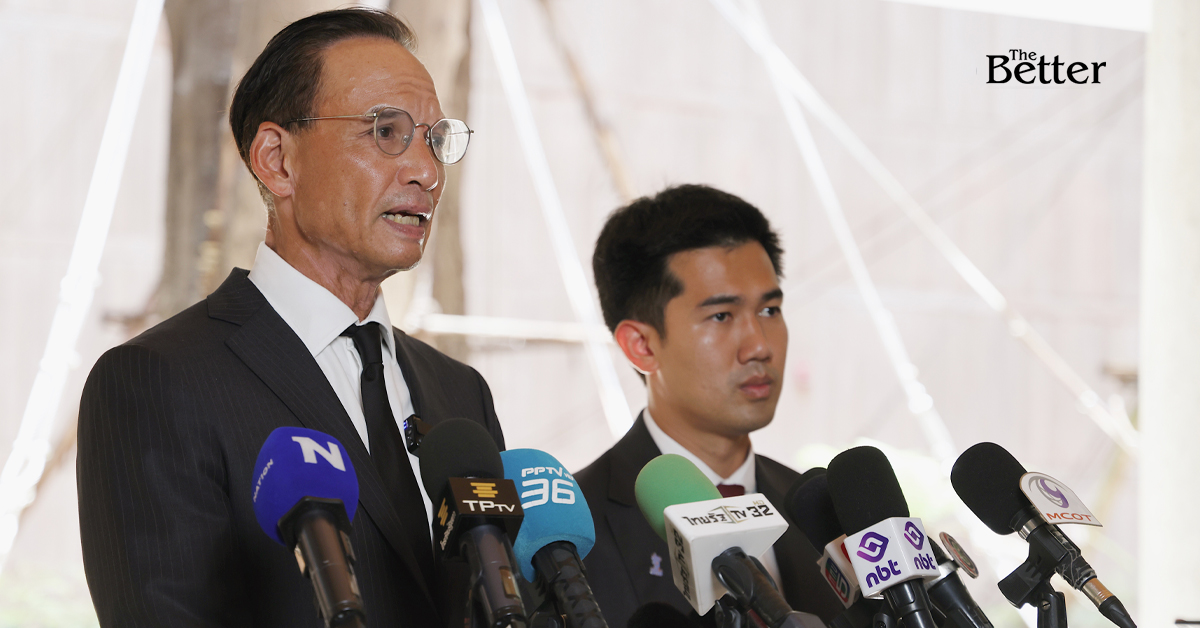
Energy Minister Ekanat Promphan has clarified the government’s position on data center regulation in Bangkok, telling Parliament that the government is taking the issue seriously following the discovery of large quantities of oil stored as backup fuel at data center facilities.
Ekanat, speaking on behalf of the Prime Minister, said the government is pursuing both investigations and regulatory measures after concerns were raised that the storage of large volumes of fuel could pose risks to public safety as well as the operation of computer servers.
He said the Ministry of Energy began sending officials to inspect data center facilities last week and discovered unauthorized oil storage tanks containing more than 150,000 liters of fuel. Legal proceedings have been initiated, while a comprehensive inspection of data centers across Bangkok is now underway.
Ekanat warned that operators found storing fuel or operating facilities without the required permits would face legal action. Violations could carry a maximum sentence of two years in prison.
He stressed that the government would not assess data center development solely from an investment or economic perspective. Safety, environmental impacts, energy consumption, and resource management must also be taken into consideration.
According to the minister, some of the problems have accumulated over the past three to four years, with certain oil storage tanks reportedly installed as early as 2020.
“This makes it necessary to urgently establish a clear and comprehensive regulatory system,” Ekanat said, emphasizing the need to ensure that Thailand’s rapidly expanding data center industry develops in line with public safety and environmental requirements.
The opposition is urging the government to clarify concerns regarding the data center
However, the opposition has called on the government to adopt a clearer and more comprehensive stance on the rapid expansion of data centers in Thailand.
Korn Chatikavanij, Deputy Leader of the Democrat Party, said after questioning the government during a live parliamentary interpellation on its policy and position toward attracting global data center investment that the public was increasingly concerned about the proliferation of data centers in urban and other areas, including along Rama 9 Road, as well as the unauthorized storage of large quantities of oil for backup power.
He argued that the situation reflected shortcomings in the government’s management and regulatory framework, which he described as slow and outdated, potentially causing both short- and long-term damage to the country.
Although the government began taking action by establishing a committee to oversee data center policy in August, Korn said the Democrat Party believed the move had raised more questions than answers. The party has therefore identified seven major concerns that it wants the government to clarify urgently.
1. Lack of a clear regulatory authority and good governance
Korn said there is currently no single agency with comprehensive responsibility for regulating data centers. This could allow operators to circumvent existing laws by classifying facilities as warehouses, while the necessary licenses remain divided among multiple agencies with limited coordination.
He also raised concerns over the lack of requirements for Environmental Impact Assessments (EIAs) for data center projects and questioned whether the government-appointed committee has sufficient authority to effectively oversee the industry.
In addition, he said recently issued Board of Investment (BOI) regulations remain unclear on whether they will apply retroactively to projects that have already received approval but have not yet begun construction.
2. Contradictions between data center expansion, energy policy and electricity prices
Korn questioned the policy of promoting Thailand’s electricity capacity as a source of power for foreign data center operators, arguing that it could conflict with the country’s efforts to reduce its dependence on fossil fuels.
He noted that much of Thailand’s reserve generating capacity relies on natural gas, meaning increased demand could require additional liquefied natural gas (LNG) imports. Fluctuations in global gas prices could then directly affect the Fuel Adjustment Charge (FT) and increase the electricity burden on households.
If existing reserve capacity becomes insufficient, he warned, the government could face pressure to build additional fossil-fuel power plants, potentially undermining Thailand’s strategy to increase the share of renewable energy.
3. Growing pressure on water resources
Korn also warned of potential conflicts over water resources, noting that more than half of proposed data center projects are reportedly located in the Eastern Economic Corridor (EEC).
He said a medium-sized data center could consume a substantial amount of water, with demand potentially equivalent to the annual water consumption of 50,000–60,000 people.
Allowing private companies to directly secure large volumes of water, he argued, could affect the availability of water for local communities and farmers and raise questions about the equitable allocation of a limited public resource.
4. Uncontrolled pollution and environmental impacts
The opposition also raised concerns about the environmental consequences of data center development, particularly if projects are exempt from EIA requirements.
Korn said the absence of comprehensive environmental assessments could leave gaps in measures to prevent or mitigate pollution, including noise, excess heat and wastewater generated by large-scale facilities.
5. Risks to technological and AI sovereignty
Korn questioned whether Thailand’s strategy of opening its data center sector to foreign investment is being matched by sufficient efforts to develop the country’s own artificial intelligence capabilities.
He said Thailand’s domestic AI development remains constrained by limited access to advanced computing infrastructure, citing the use of approximately 700 GPU chips that he described as outdated.
He warned that failure to strengthen domestic AI capabilities could undermine Thailand’s long-term technological competitiveness and raise concerns over data security and national technological sovereignty.
6. Lack of clarity over benefits for Thai businesses and local content
Korn said the government has yet to establish clear mechanisms ensuring that Thai entrepreneurs, startups and small and medium-sized enterprises (SMEs) will benefit from the expansion of foreign-owned data centers.
He questioned whether Thai businesses would have meaningful access to computing capacity at facilities receiving investment incentives and using Thailand’s land, electricity and other resources.
He called for clear requirements or agreements on local content and access to computing resources to ensure that data center investment generates broader economic benefits for Thai businesses.
7. Risk of international restrictions on chip imports
Korn also raised concerns about Thailand’s position in the global technology rivalry, particularly after the United States raised concerns that Thailand could potentially become a route for China to gain access to advanced chips subject to US export controls.
He warned that if the United States were to impose sanctions or tighten restrictions on the export of high-end GPUs to Thailand, the measures could have serious consequences for the country’s technology sector and broader digital economy.
Korn stressed that the seven concerns were not merely theoretical or speculative, but reflected challenges being confronted by countries around the world as they seek to balance technological development, energy security, environmental protection and national interests.
He urged the Data Center Policy Committee, chaired by Ekniti Nitithanprapas, to carefully accelerate its planning and regulatory work ahead of its first meeting.
“The government must ensure that data center investment generates the maximum possible benefits for the Thai economy while minimizing its impact on the public,” Korn said.
Questions Over Local Benefits and Resource Demands of Data Centers: The Case of Rayong Province
What will local communities gain from data center investment? This is a key question being raised in Rayong Province, where a significant share of Thailand’s planned data center projects is expected to be concentrated.
More than 70% of proposed data center projects are reportedly targeted for the Eastern Economic Corridor (EEC), with Rayong emerging as a major investment destination.
Pasin Pitutecha, a Member of Parliament for Rayong Province from the Democrat Party, has raised concerns over the government’s readiness to accommodate the rapid expansion of the data center industry. He said the Democrat Party had previously submitted a parliamentary motion on the issue during the parliamentary recess, citing concerns over the government’s preparedness and regulatory framework.
Pasin highlighted three major concerns from the perspective of local communities.
1. Water Resource Allocation and Access
Rayong continues to face challenges involving both household water supplies and water for agriculture. Pasin said the government must therefore clearly establish priorities for water allocation as data centers begin demanding significant quantities of water.
The key question, he said, is whether priority will be given to data center projects or to local residents and farmers who depend on water for their daily lives and livelihoods.
Pasin stressed that he was not opposed to technological development or data center investment. However, he called on the government to clearly define the regulatory framework for this emerging industry and ensure that the necessary infrastructure and resources are prepared before projects begin operations, including facilities that involve the installation or leasing of server equipment.
2. Zoning and Mitigation Measures
Pasin also expressed concern over the lack of clear zoning and environmental mitigation measures for data centers.
He noted that data centers generate significant amounts of heat and require substantial supporting infrastructure. However, there is currently no sufficiently clear zoning framework specifying how such facilities should be located or what measures should be implemented to protect surrounding communities.
He called for measures such as designated green spaces, tree-lined buffer zones and other systems to reduce heat and mitigate potential impacts on nearby residential areas.
Pasin warned that these issues need to be addressed before development progresses further, noting that some data center construction projects have already begun.
3. Ensuring Benefits Reach Local Communities
Pasin said the government must ensure that data center investment generates tangible benefits for communities in the Eastern region through clear local-content requirements.
He noted that communities in the East have borne the environmental costs of industrial development for decades, dating back to the early stages of industrialization in 1981. He said the experience of the EEC over the past nine years had also highlighted problems arising from discontinuity in government policies and oversight.
Data centers, he said, represent a new potential economic engine for Thailand, but the government must learn from these past experiences and establish clear plans before projects move forward.
Pasin called for local-content measures to be incorporated into data center development from the outset, ensuring that the use of local resources translates into employment, business opportunities and other tangible benefits for surrounding communities.
“The people of the Eastern region have sacrificed their environment and resources for a long time,” Pasin said. “The government must ensure that the resources used for data center development ultimately benefit the people in the area and the country as a whole, rather than only a select group of investors.”
He stressed that the objective should not be to oppose investment, but to ensure that Thailand’s transition into a technology-driven economy is managed responsibly and that the benefits of new industries are distributed more broadly across society.
Anutin: Thailand to Tighten Data Center Rules While Supporting AI and Technology Investment
Prime Minister and Minister of Interior Anutin Charnvirakul has outlined the government’s framework for licensing data center operations, saying a Data Center Committee has been established to develop clearer regulations that take public concerns into account while providing greater certainty for investors.
Anutin said the new criteria would consider the concerns raised by the public and ensure that issues related to data center development are assessed comprehensively and fairly. At the same time, the framework would provide greater clarity for businesses seeking to invest in Thailand.
Asked about Thailand’s ambition to become a regional data center hub, Anutin said efforts to develop the sector had been ongoing, but no new data center projects had currently been approved.
Projects that have already received approval, he said, would proceed because preparations for essential resources, including electricity and water, had already been made.
However, the government would address concerns surrounding the advance allocation of permits and resource rights, particularly electricity and water usage, and whether such approvals could subsequently be used for commercial purposes or speculation.
“The government will not support such practices,” Anutin said, adding that only businesses that are prepared to comply with the new regulatory criteria and capable of meeting the requirements would be allowed to proceed.
Anutin stressed that clearer regulations would not undermine investor confidence. On the contrary, he said, the government remains committed to promoting investment in artificial intelligence and advanced technologies to strengthen Thailand’s technological capabilities, while ensuring that data center development operates within an appropriate regulatory framework.
Regarding illegally operated data centers in Bangkok and other areas, Anutin said businesses must comply with the law.
“If it is an illegal operation, legal action must be taken, because all types of businesses must conduct their operations legally,” he said.
The Prime Minister also identified illegal cryptocurrency mining operations as an area requiring urgent attention. He said such operations can consume substantial amounts of electricity and rely on large-scale infrastructure.
According to Anutin, some operators have attempted to establish facilities outside industrial estates, Bangkok, and major urban areas while deploying equipment that requires significant amounts of electricity. In some cases, operators have allegedly connected directly to electricity supplies or stolen electricity.
“We must make every effort to suppress this decisively,” Anutin said.
The government is currently developing a regulatory framework designed to distinguish legitimate data center investments from projects involving speculation, unauthorized operations, or the improper use of public resources.
Anutin said the government would continue supporting investment in AI and other advanced technologies while simultaneously addressing potential impacts on communities and ensuring the responsible use of national resources, including electricity and water.
The government also aims to strengthen Thailand’s digital infrastructure and cloud computing capabilities as part of its broader strategy to develop the country into a competitive technology and data center hub.
The Better News English