
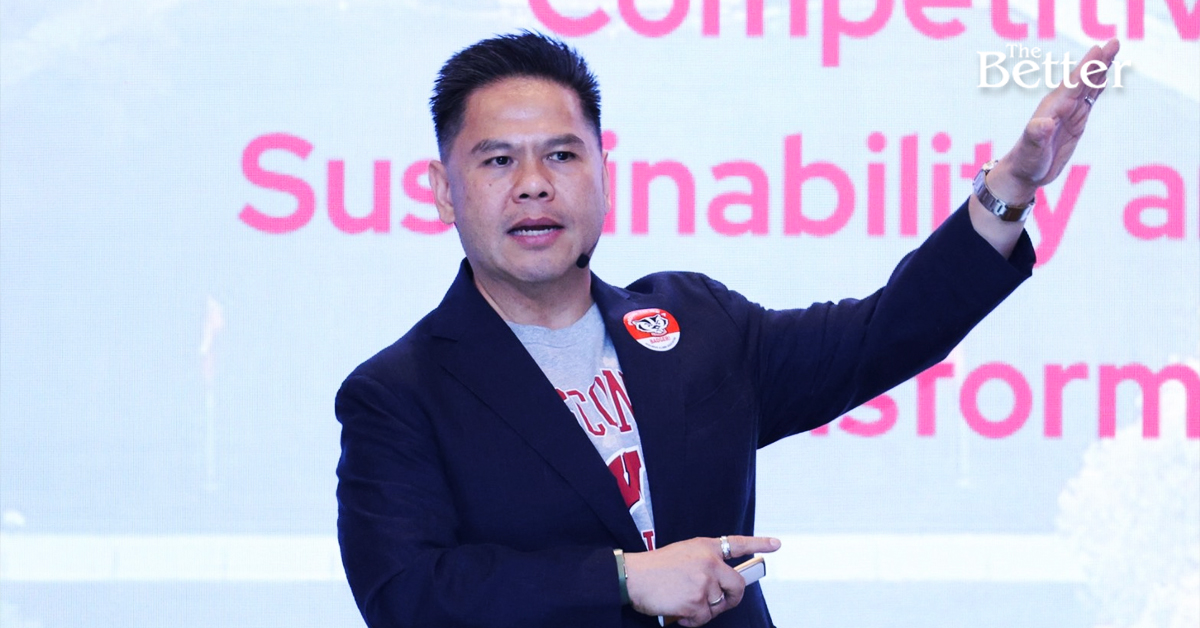
Varawut Silpa-archa, Minister of Industry, said Thailand can turn global uncertainties into economic opportunities by positioning itself as a “safe haven” for technology, investment, trade and food production.
Speaking at the Wisconsin Alumni Dinner 2026 at The St. Regis Bangkok, where he delivered a keynote address titled “Thailand’s Future in a Changing World: Competitiveness, Sustainability, and National Transformation,” Varawut said the global economy is facing a “polycrisis” driven by geopolitical tensions, climate change, demographic shifts and rapid technological advances.
These challenges are contributing to a “K-shaped economy,” in which certain industries and groups continue to prosper while unskilled workers and small and medium-sized enterprises (SMEs) risk being left behind.
While Thailand cannot control external uncertainties, Varawut said it can strengthen its resilience by leveraging its strategic geographic location and existing strengths, particularly its agricultural and food-production capabilities.
Agriculture accounts for 8.7% of Thailand’s GDP and employs more than 28% of the workforce, making it a critical pillar of the economy and national security. In a volatile global environment, food remains an essential commodity regardless of economic conditions.
Varawut cited businessman Dhanin Chearavanont’s description of Thailand’s natural resources as “oil on land,” referring to the country’s water, soil, biodiversity and accumulated agricultural knowledge. Unlike oil and gas, these resources can be replenished and utilized sustainably.
Combined with advanced technology and Thailand’s strategic location, these assets could help establish the country as a secure global food production base—a “Safe Haven for Food of the World”—and elevate food security into a strategic national asset.
AI² Strategy to Connect Technology and Agriculture
Varawut said the key to achieving this transformation is the “AI²” strategy, or “two-legged AI,” which aims to connect advanced technology industries with the grassroots economy.
“The key is the ‘AI²’ strategy, or two-legged AI, to connect advanced technology industries with the grassroots economy,” he said. “This ensures that the growth of new industries is not concentrated solely among large or multinational corporations, but also transfers value to entrepreneurs and citizens within the country.”
The first leg of the strategy is Advanced Industries, covering artificial intelligence, digital technology, semiconductors, electronic components, power electronics, robotics and automation.
Thailand’s exports grew by more than 17.6% in the first half of the year, with nearly half of the growth attributed to digital technology components, he said.
However, Varawut cautioned that strong export growth does not necessarily mean that all the resulting value is retained within Thailand, as the country remains heavily dependent on imported raw materials and components.
He therefore called for a shift from conventional manufacturing and assembly toward high-value industries that use technology and innovation to generate greater domestic value.
The second leg of the AI² strategy is Agricultural Industries, which seeks to apply advanced technology to agriculture not only to increase productivity but also to create higher-value products, ranging from innovative food products and medical substances to advanced processed foods and smart agriculture.
Technology to Transform Agriculture
Varawut said upgrading Thailand’s agricultural sector will require the adoption of technology throughout the entire value chain, including AI, the Internet of Things (IoT), automation, robotics, databases and biotechnology.
These technologies can help increase productivity, reduce waste and energy consumption, and improve traceability. At the same time, Thailand needs to strengthen supporting systems covering processing, storage, logistics, marketing and financing.
The Ministry of Industry will accelerate investment and technology transfers while strengthening waste management and reducing carbon emissions across more than 80 industrial estates nationwide, Varawut said.
The ministry will also promote high-value agricultural industrial estates, reform laws, regulations and standards to support a “Smart & Green Industry,” and strengthen SMEs through skills development, upskilling and financial support.
Another priority is increasing the use of domestically produced raw materials and components to retain more economic value within the country.
Green Standards as a Gateway to Global Markets
Varawut also urged Thai businesses to adapt to increasingly stringent environmental and trade requirements, including environmental, social and governance (ESG) standards, the European Union’s Carbon Border Adjustment Mechanism (CBAM), carbon credits and non-tariff barriers (NTBs).
Rather than viewing these requirements solely as obstacles, he said Thai businesses should regard them as a “VISA” or gateway to international markets.
“Modern competition is not measured solely by price and quality,” Varawut said. Businesses must also demonstrate where raw materials originate, how products are manufactured, whether clean energy is used and how waste is managed.
He emphasized that addressing the multiple crises facing the global economy cannot be achieved by the government alone. It requires closer cooperation between industry and agriculture, advanced technology and human opportunities, and economic growth and sustainability.
Through this approach, Thailand can seek to transform the K-shaped economy into one that creates greater value, distributes opportunities more broadly and reduces inequality, while turning the country’s food-production strengths into a strategic advantage in the modern global economy.
The Better News English