
Being Neutral in the AI Cold War: Why Thailand Chooses Cooperation Without Alliance
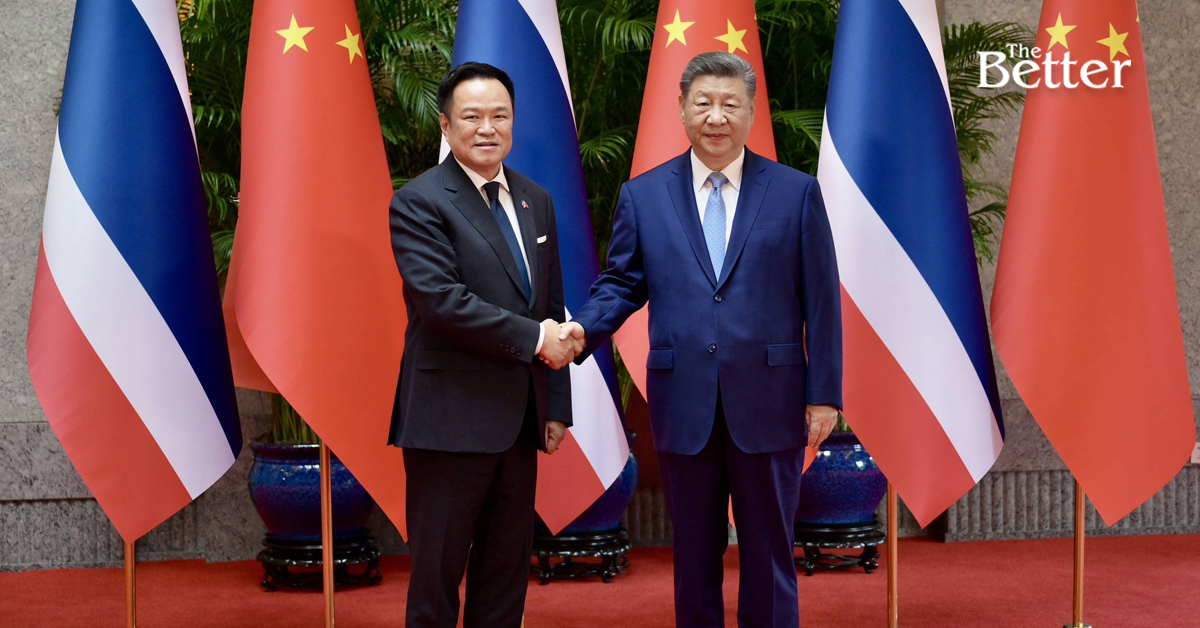
People may not realize that Thailand is a key player in the AI-related industry, and the Thai Prime Minister's appearance at the World Artificial Intelligence Cooperation Organization (WAICO) meeting in China was not merely a publicity exercise or a decorative gesture.
One crucial component of the AI industry is the printed circuit board (PCB), which plays an essential role in data processing. The more powerful the AI systems we develop, the faster and more advanced the PCBs need to be to handle increasingly demanding data-processing requirements. This is particularly important for machine learning and artificial intelligence applications.
Southeast Asia currently accounts for approximately 12.3% of global PCB manufacturing value, with Thailand ranking as the largest PCB manufacturing base in Southeast Asia. Thailand's PCB manufacturing industry is projected to be worth US$5.06 billion in 2025, representing a 22.4% year-on-year increase and approximately 5.4% of the global market.
This highlights Thailand's growing importance to the AI ecosystem.
The rapid expansion of Thailand's PCB manufacturing sector is being driven by continued investment from companies in Taiwan and mainland China, as well as the growing demand for AI servers, high-speed networking equipment, and satellite communications products. According to Taiwan's UDN news agency, the value of Thailand's PCB production is projected to reach US$6.09 billion in 2026, a 20.4% increase from the previous year.
Thailand is also attracting attention for its AI strategy. According to China Economic Net, Thailand's strategy of using AI as a new engine for economic growth is effectively redefining national competitiveness. Rather than focusing solely on basic technological development, Thailand is emphasizing the deep integration of AI into the macroeconomy, the real economy, and public services. This approach could help Thailand overcome development challenges while potentially serving as a model for other countries in the Global South seeking new growth opportunities in the digital economy.
We can therefore see that a significant impetus behind Thailand's AI-component manufacturing industry comes from mainland China and Taiwan. I want you to remember this point, because we will return to it when the time comes.
First, however, let's return to the "World Artificial Intelligence Cooperation Organization," or WAICO.
WAICO aims to promote international cooperation and global governance in artificial intelligence, with the stated goal of ensuring "the healthy and orderly development of artificial intelligence in a beneficial, safe, and equitable direction, and for the benefit of all humanity."
AI governance has been discussed by governments around the world for years, but few concrete mechanisms have emerged. From this perspective, China's initiative to take the lead in establishing such a framework can be viewed as a positive development.
However, from a geopolitical perspective, WAICO can also be viewed as a grouping of countries that are relatively friendly toward China and willing to cooperate around a common agenda for AI governance.
And who knows? Perhaps its ambitions could eventually extend beyond AI governance into broader cooperation in machine learning, artificial intelligence, and related technologies.
It is worth noting, however, that among the 29 countries described as China's partners within WAICO, relatively few are considered major contributors to global AI development.
Of these countries, Malaysia appears particularly promising, given its position as a major PCB producer in ASEAN, alongside Thailand and Vietnam.
Russia has a higher level of AI development than many other WAICO members and has emphasized the concept of "AI sovereignty"—the goal of developing domestic AI capabilities without becoming dependent on foreign technology. However, Russia continues to face significant challenges in semiconductor and advanced chip production. As a result, it lacks complete technological independence in this area, leading some commentators to argue that Russia is "losing the AI race."
Nevertheless, Russia's position and strategic objectives may offer an indication of where WAICO could be heading: toward greater AI sovereignty among China's partners, including the sharing of open-source AI technologies, securing sufficient hardware capacity, and ensuring access to the raw materials required for semiconductor manufacturing.
This is where countries such as Malaysia—and China itself—could become important, particularly in relation to semiconductor supply chains and critical minerals.
So, is WAICO simply a powerless grouping? Not necessarily.
Many of its members possess significant reserves of rare earth elements and other critical minerals that are important to advanced manufacturing and semiconductor supply chains. Brazil, for example, has one of the world's largest rare earth reserves, estimated at approximately 21 million tonnes, behind China.
This represents the geopolitical dimension of WAICO.
From this perspective, WAICO can be seen as part of a broader response to Pax Silica.
Pax Silica was established by the United States in December 2025 to strengthen supply chains for AI-related technologies and ensure that AI development among US-aligned countries does not become vulnerable to disruptions—particularly by reducing their dependence on China for critical raw materials used in semiconductor manufacturing.
In ASEAN, the Philippines and Singapore are members of Pax Silica. This is understandable, given their longstanding strategic relationships with the United States.
Pax Silica and WAICO therefore share an important similarity: both bring together groups of countries aligned with either the United States or China to cooperate on the development, supply, and governance of AI and related technologies.
Frankly speaking, this increasingly resembles a choice of "camp" in the emerging AI rivalry between the US-led and China-led blocs.
This is the Cold War of AI.
So, which camp is Thailand in?
During the Cold War, from the 1940s through the 1990s, Thailand was firmly aligned with the "Free World" camp, with the United States as its "big brother" and South Korea, Taiwan, and Japan as its ideological allies.
Today, Pax Silica still includes these countries—with the notable exception of Thailand.
At the same time, WAICO includes most of the remaining ASEAN countries, again with Thailand as an exception.
So, is Thailand the black sheep?
No. In fact, this may be a clever diplomatic strategy.
Thailand has positioned itself to negotiate with both sides, effectively saying: "We are ready to cooperate, but we do not want to become a full-fledged member of either camp."
Thailand's growing capabilities in AI, its relatively advanced AI deployments compared with other ASEAN countries, and its increasingly clear vision for AI development mean that it is well positioned to cooperate with China. In some respects, Thailand may be better positioned to engage with China on AI than many of the countries that have joined WAICO.
At the same time, Thailand has maintained a broadly pragmatic and flexible foreign policy since the end of World War II. This approach has benefited Thailand and has allowed it to avoid becoming permanently locked into the interests of competing major powers. Even though Thailand initially aligned itself with the United States during the Cold War, it demonstrated an ability to adapt its foreign policy as circumstances changed.
This time is no different.
Reducing the AI rivalry to a simple choice between China and the United States makes it easier to pressure Thailand into choosing a side. But Thailand has cards to play with both sides. By remaining outside the two competing blocs, it can avoid being dragged into a conflict and becoming merely a "foot soldier" in a battle between larger powers.
Conversely, Thailand has considerable potential in the AI industry and is an attractive partner for China. Within ASEAN, Malaysia may be the only country that can realistically compete with Thailand in some aspects of the AI-related supply chain while also maintaining close ties with the China-led technology ecosystem.
Although Thailand is not a WAICO member, it is certainly not an opponent. It remains willing to cooperate with China on AI and related technologies. In this sense, Thailand is effectively extending a helping hand to WAICO without formally joining the organization.
At the same time, Pax Silica views Thailand as a longstanding US ally. Despite periods of tension with the Trump administration, Thailand remains closely tied to the United States, particularly in the area of security and defense. Severing Thailand from this relationship would be extremely difficult.
Furthermore, Thailand's position in the global AI ecosystem is not insignificant. Compared with other countries associated with Pax Silica, Thailand stands alongside South Korea, Taiwan, and Japan as an increasingly important player in AI-related hardware manufacturing.
According to the International Monetary Fund's World Economic Outlook Update, July 2026, Thailand is among the world's four largest exporters of AI-related hardware. The IMF noted that "the top four largest exporters of AI-related hardware (Taiwan, South Korea, Thailand, and Malaysia) experienced a seasonally adjusted annual growth rate that was 4.4 percentage points higher than projected."
Among these four "tigers," Thailand stands apart.
By remaining outside both groups, Thailand ensures that both sides have an incentive to maintain good relations with Bangkok. Thailand can cooperate with both the United States and China without formally aligning itself with either side. More importantly, it can maintain relationships with two longstanding partners without being forced to choose between them.
What Did Thailand Gain From the AI Conference in China?
The answer is a more stable political position in the global arena.
China did not pressure Thailand to become a WAICO member. Instead, it announced separate areas of cooperation with Thailand. This suggests that China views Thailand as a trusted partner—one that can cooperate with China without necessarily being forced into a formal alliance.
China may also regard Thailand as a sufficiently important partner to warrant bilateral cooperation rather than simply bringing Thailand into a larger multilateral grouping.
This gives Thailand something increasingly valuable in global politics: strategic room to maneuver.
That position is underpinned by Thailand's growing capabilities in AI and AI-related industries.
Therefore, advances in AI are not merely a source of economic growth and revenue for Thailand. They are also becoming a source of strategic leverage—giving Bangkok greater bargaining power when dealing with the world's major powers as they increasingly organize themselves into competing technological camps.
In the emerging AI rivalry, Thailand's greatest strength may not be choosing the right side.
It may be having the ability to work with both sides while belonging fully to neither.
Opinion article by Kornkit Disthan, Assistant Managing Editor and International News Editor, The Better.