
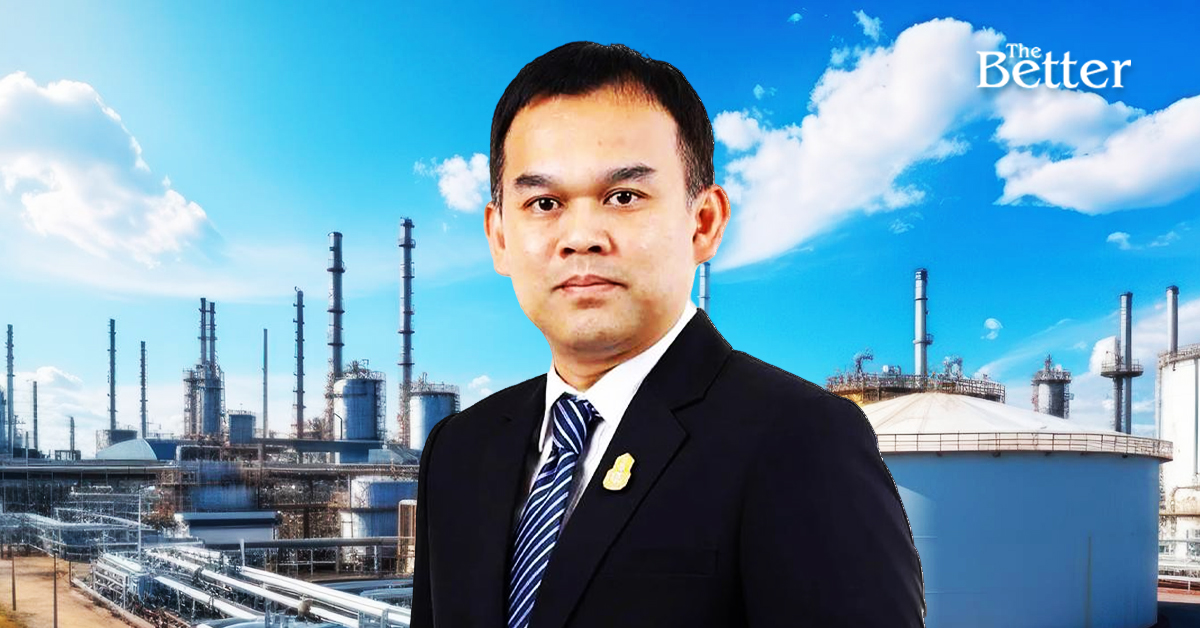
Chanthanon Wannakhajorn Appointed New Permanent Secretary of the Ministry of Energy
The Cabinet, at its meeting on August 18, 2026, approved the appointment of Chanthanon Wannakhajorn as the new Permanent Secretary of the Ministry of Energy, replacing Prasert Sinsukprasert, the incumbent who is due to retire on September 30, 2026.
The appointment marks another significant change at the C11 level within the Ministry of Energy. It is also notable because previous appointments to the position have often involved candidates from outside the ministry. Chanthanon's selection therefore came as something of a dark-horse choice, particularly given earlier reports that Dr. Nattapol Rangsitpol, Permanent Secretary of the Ministry of Industry, was among the leading candidates for the position.
Chanthanon's appointment is particularly noteworthy because his career has not been rooted directly in the energy sector. He is a senior civil servant with a background in agricultural economics who spent much of his career at the Ministry of Agriculture and Cooperatives. During his time there, he served when Newin Chidchob was Deputy Minister of Agriculture and Cooperatives, giving him an opportunity to work closely with the veteran politician and gain experience in economic policy, foreign affairs, and international trade.
Chanthanon previously served as Secretary-General of the Office of Agricultural Economics (OAE) and has also served on the boards of several state enterprises. He was later appointed Special Expert at the Office of the Prime Minister before being selected to lead the Ministry of Energy.
Born on May 23, 1971, Chanthanon holds a bachelor's degree in accountancy from Bangkok University. He subsequently pursued further studies in business administration in the United States and earned a Master of Business Administration (MBA) from the University of New Hampshire.
His civil service career began at the Ministry of Agriculture and Cooperatives, where he developed expertise in agricultural economics, foreign affairs, and international trade negotiations. His previous positions included Director of the Bureau of Agricultural Foreign Affairs, Deputy Secretary-General of the Office of Agricultural Economics, and Inspector-General of the Ministry of Agriculture and Cooperatives. In 2020, he was appointed Secretary-General of the Office of Agricultural Economics.
During his career in agricultural economics, Chanthanon also became involved in the development of biomass energy, including efforts to add value to agricultural waste by using it for energy production, particularly oil-palm waste. The approach reflected the broader principle of using domestic resources to create added value while helping to reduce energy costs.
He also completed the 20th Executive Program in Energy Science, which strengthened his understanding of the energy system and energy business before he assumed senior responsibilities related to the sector.
In the corporate sector, Chanthanon served as an independent director and Chairman of the Corporate Governance and Sustainable Development Committee of PTT Oil and Retail Business Public Company Limited (OR). The experience provided him with exposure to the energy industry and corporate governance, complementing his perspective on government policy and public-sector administration.
His appointment comes at a critical time for Thailand's energy sector. The Ministry of Energy faces a range of challenges, including volatility in global energy prices, rising LNG costs, energy security concerns, electricity prices, oil prices, and the transition toward cleaner energy.
One of the most important tasks will be balancing energy prices with Thailand's economic competitiveness. Energy costs have a direct impact on the country's industrial, transportation, service, and household sectors, making energy pricing a crucial factor in economic policy.
At the same time, the ministry will need to continue restructuring Thailand's energy system in line with global trends. These efforts include increasing the share of renewable energy, opening up electricity markets, investing in energy infrastructure, and reducing carbon emissions.
Another major issue will be implementing the spending plan under the Royal Decree authorizing the Ministry of Finance to borrow funds to address the impact of the energy crisis and support Thailand's energy transition in 2026. A second tranche of 200 billion baht has been earmarked for energy-transition measures.
For the business sector, issues to watch closely will include electricity prices, energy-pricing structures, oil and LNG prices, investment in clean energy, and the competitiveness of Thai industries.
The transition from agricultural economics to energy economics will present a significant challenge for Chanthanon. His extensive experience in economics, international trade, resource utilization, and public administration could provide a different perspective on energy policy. However, it remains to be seen how the economic principles and experience he accumulated throughout his civil service career will translate into managing Thailand's energy sector at a crucial juncture in the country's transition toward a new energy system.
The Better News English