
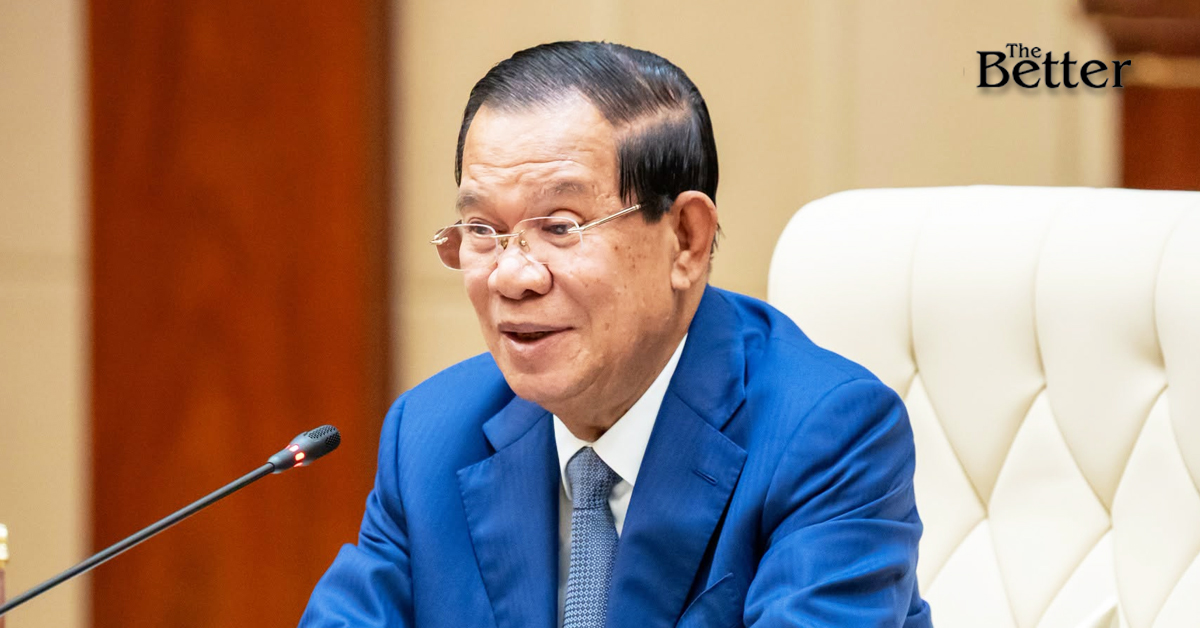
A report by Cambodian media outlet VOD has examined the country’s political landscape under what it describes as the “Hun family era,” arguing that power in Cambodia extends far beyond former Prime Minister Hun Sen and current Prime Minister Hun Manet to encompass a broad network of political, economic, and security interests.
The analysis notes that Cambodia’s current political, economic, and social conditions reflect a complex system in which the ruling Cambodian People’s Party (CPP) maintains deep institutional control, while structural challenges could create conditions for future change.
According to the report, the CPP’s authority is rooted in a tightly connected power structure that links senior political leaders, state institutions, and security forces. Loyalty to the ruling party leadership is seen as a central element of governance.
The report argues that the judiciary has been used to limit opposition activities, citing the dissolution of the Cambodia National Rescue Party (CNRP) in 2017 and restrictions affecting opposition groups, including the Candlelight Party, during the 2023 general election. It also points to the arrests of activists and journalists as examples of continuing constraints on political freedoms.
VOD’s analysis further suggests that the Hun family has strengthened its position through a system of patronage and power-sharing, particularly by promoting younger officials and expanding the role of government institutions in recent years. Large-scale infrastructure projects, including the Funan Techo Canal, have also been presented as symbols of national development and unity, reinforcing the legitimacy of the ruling leadership.
Economically, the report highlights several challenges that could influence Cambodia’s future political trajectory. It notes that the International Monetary Fund (IMF) has projected slower economic growth in the coming years, while Cambodia’s scheduled graduation from the United Nations’ Least Developed Country (LDC) category in December 2029 could affect preferential access to key export markets.
Analysts cited in the report warn that changes in trade arrangements with Western economies could affect employment in export-oriented industries, particularly the garment sector, and increase economic pressures on lower-income households.
The report suggests that a prolonged economic downturn could test the cohesion of political and business elites, potentially leading to negotiations aimed at preserving economic interests while encouraging institutional reforms. It also identifies generational change as another factor that could shape Cambodia’s future, with younger citizens and emerging leaders seeking greater political participation and governance reforms.
Social movements centered on issues such as national sovereignty, land rights, and economic inequality could also contribute to calls for peaceful political change, according to the analysis. Nationalist sentiment, the report argues, may influence how state institutions respond to public demands and could create opportunities for dialogue.
Looking ahead, VOD outlines a three-stage scenario for Cambodia’s political development. Between 2026 and 2030, the CPP is expected to maintain firm control, supported by technological tools and close ties with China. During the 2030–2040 period, economic pressures and generational shifts could encourage reform-oriented groups within the political establishment. Between 2040 and 2050, demographic changes and rising educational attainment among younger generations may increase demands for greater political openness, accountability, and improved governance.
The report concludes that while the Hun family’s hold on power appears strong, long-term stability will depend on the country’s ability to address economic challenges, debt burdens, and social change. It argues that any transition toward a more open political system would likely be gradual and require broad participation across Cambodian society.
By The Better News English
Photo - Samdech Hun Sen of Cambodia (@hunsencambodia) / Facebook