
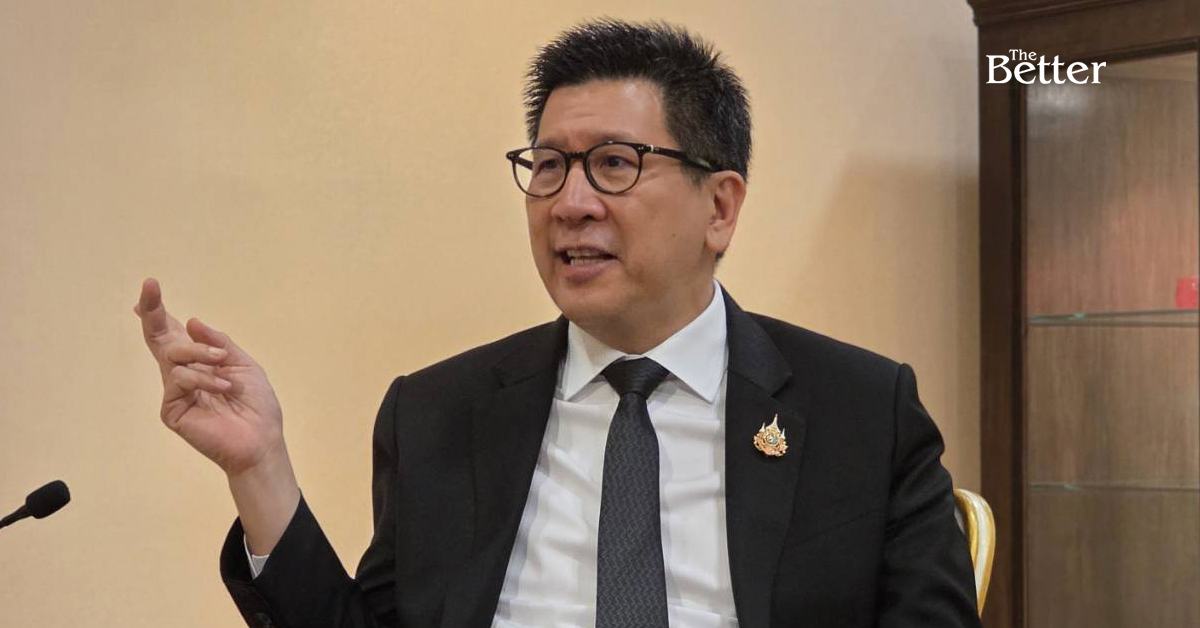
Bangkok - Deputy Prime Minister and Finance Minister Ekniti Nitithanprapas has outlined the government’s priorities for the remaining funds under a 400-billion-baht loan decree, saying the remaining 200 billion baht will be primarily directed toward energy-transition projects, which he described as an urgent issue requiring immediate attention.
Of the first 200 billion baht allocated under the decree, approximately 40 billion baht remains. Ekniti said Prime Minister Anutin Charnvirakul had instructed relevant agencies to conduct a thorough assessment of the situation, emphasizing that the limited funds must be used cautiously and targeted toward projects that can deliver the greatest benefits.
Regarding the Ministry of Tourism and Sports’ proposal to allocate approximately 1.75–2 billion baht for the “Thai Tourism Plus” project, Ekniti said the proposed amount was reasonable. However, he stressed that the funds must be used for their intended purpose, particularly to provide assistance and support to businesses. He added that an economic assessment was necessary to determine whether the project was needed and how effectively it could contribute to the economy.
Asked whether the 200 billion baht earmarked for energy-transition projects could be used for a second phase of the “Thai Help Thai Plus” scheme after the first phase concludes in late September, Ekniti said such an allocation would be legally possible. However, he emphasized that the government’s intention was to preserve the funds for energy-transition initiatives. Any proposal for a second phase of the scheme would therefore need to be carefully evaluated from all perspectives.
Under the government’s energy-transition plan, approximately 50–60 billion baht is expected to be allocated to support the installation of rooftop solar systems, with the aim of helping households reduce their reliance on conventional energy sources and lower electricity costs.
Financial institutions, including the Government Savings Bank and the Government Housing Bank, are expected to provide loan facilities to support households and other eligible applicants seeking to install rooftop solar systems.
The government views the initiative as part of a broader effort to accelerate Thailand’s energy transition while using public funds strategically to address urgent economic and structural challenges.
The government is also planning measures to support the sale of electricity generated by households and businesses back to the national grid, the replacement of conventional electricity meters with smart meters, and the development of transmission infrastructure to ensure the country’s energy system can systematically accommodate the transition to clean energy.
Deputy Prime Minister and Finance Minister Ekniti Nitithanprapas said Thailand remains heavily dependent on oil and natural gas, particularly natural gas used for electricity generation. He said a comprehensive plan was therefore needed to manage the energy transition, covering electricity generation, metering systems and transmission infrastructure to maintain the stability and reliability of the power system.
In the transport sector, the government is also considering plans to convert public transport vehicles to electric vehicles (EVs) across seven categories, as many existing buses have been in service for extended periods. However, Ekniti said the details of the program and its budget framework are still under consideration.
Ekniti also spoke about his recent discussion with the CEO and co-founder of Grab Holdings Limited, saying Grab executives had expressed appreciation for the government’s participation in the “Thai Chuay Thai Plus” project.
The project involved the development of an artificial intelligence (AI) system similar to the “Nok Krasip” application, designed to help merchants improve operational efficiency and increase sales. According to Grab, participating merchants recorded sales increases of more than 68 percent.
Ekniti said the results reflected the “Plus” concept behind the initiative, which aims to empower merchants, increase their revenues and improve their business operations.
He said the government would next conduct fieldwork and engage directly with members of the public and merchants to gather information and feedback that could be used to further develop the project.
The “Thai Chuay Thai Plus” project is scheduled to conclude at the end of September.
Asked whether a second phase would be launched immediately after the project ends, Ekniti said the government would first assess all relevant details and consider the project’s suitability before making a decision.
“We will consider all the details and appropriateness thoroughly before making a decision,” he said.
The Better English News