
The recent crisis surrounding the Strait of Hormuz has reignited concerns among Southeast Asian countries over the vulnerability of major maritime chokepoints. A growing question has emerged: if a future confrontation occurs between the United States and China, could the Strait of Malacca face a similar geopolitical crisis?
In response to these concerns, several ASEAN countries have begun reassessing their strategic positions.
Indonesia, for instance, has proposed the introduction of toll fees for vessels passing through the Strait of Malacca. The move is widely seen not primarily as a revenue-generating measure, but rather as an attempt to reinforce Indonesia’s role and authority over one of the world’s most important shipping routes before external powers seek greater influence.
Meanwhile, Singapore has emphasized the importance of maintaining freedom of navigation. In an interview, Singapore’s Foreign Minister Vivian Balakrishnan stated that navigation through the Strait of Malacca and the Singapore Strait must remain open to all parties, stressing that Singapore would not support any measures that restrict access to these critical maritime routes.
Thailand, which serves as a strategic gateway at the western end of the Strait of Malacca region, has also responded by reviving its long-discussed Land Bridge project, a proposed logistics corridor connecting the Gulf of Thailand with the Andaman Sea.
This article does not focus on whether Thailand’s Land Bridge is economically viable. Instead, it examines a broader strategic question:
“Would China actually become the main user of Thailand’s Land Bridge?”
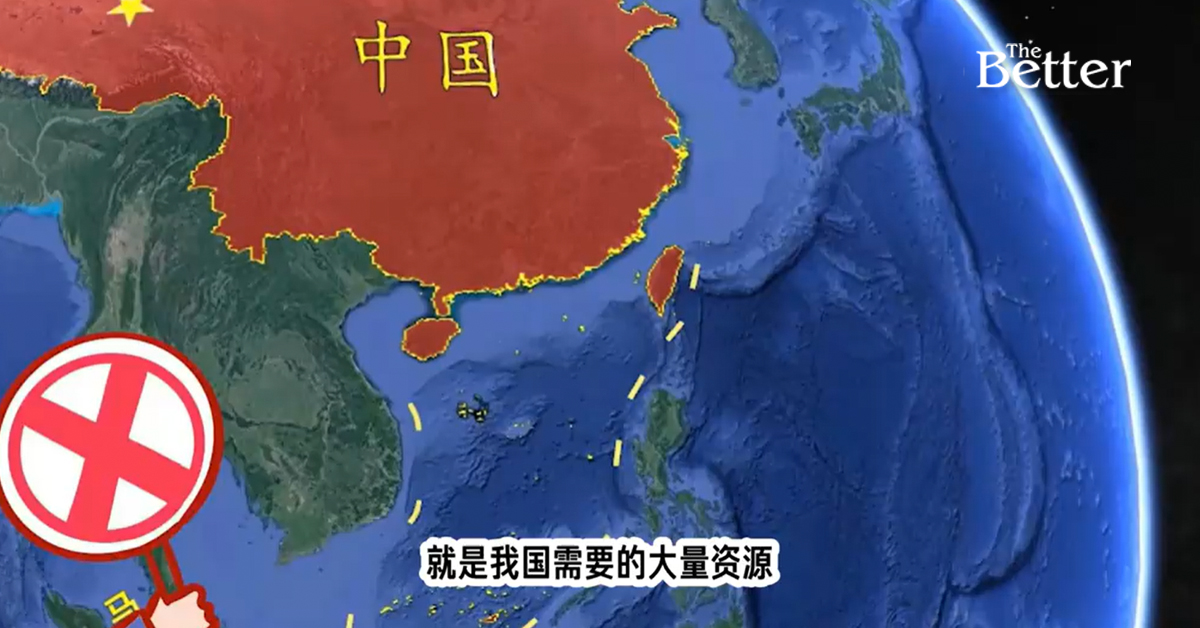
This question is closely linked to the concept of the “Malacca Dilemma” — China’s long-standing concern that its energy supplies and trade routes could be disrupted if access through the Strait of Malacca were restricted due to geopolitical tensions.
Historically, China’s concerns over the Strait of Malacca were associated with issues such as piracy and terrorism. However, those threats were most prominent nearly two decades ago. Today, Beijing’s primary concern is the possibility of a strategic confrontation with the United States.
In a potential conflict scenario, China fears that the United States and its allies could restrict access to the Strait of Malacca, limiting China’s ability to transport exports from the South China Sea to markets in Europe and beyond. At the same time, essential energy supplies, particularly oil and natural gas from the Middle East, could face difficulties reaching China through the same route.
The strategic importance of the Strait of Malacca cannot be overstated. The number of oil tankers passing through the strait into the South China Sea is approximately three times higher than those passing through the Suez Canal and five times higher than those passing through the Panama Canal, making it one of the world’s most critical energy corridors.
The question, therefore, is whether the Malacca Dilemma has become more serious following the Strait of Hormuz crisis — and whether China should view Thailand’s Land Bridge as a strategic solution.
At present, China has not provided a clear answer. Therefore, this analysis examines available geopolitical and economic factors to understand why China may not necessarily need Thailand’s Land Bridge as an alternative route if a future crisis similar to the Strait of Hormuz occurs.
The Strait of Hormuz Crisis and Lessons for the Strait of Malacca
The conflict involving the United States, Israel, and Iran has led some observers to conclude that Washington’s inability to fully prevent disruption in the Strait of Hormuz demonstrates a limited capacity to control other strategic waterways, including the Strait of Malacca.
However, this interpretation overlooks the strategic realities of maritime power.
In practice, the United States has been able to exert significant pressure on Iran by controlling access around the Strait of Hormuz. Although Iran has attempted to threaten shipping routes within the strait, the broader impact has not been symmetrical. The restrictions primarily affect Iran’s ability to export energy and access international markets, while the United States and its allies possess alternative sources and strategic advantages.
This represents a form of economic warfare strategy designed to apply pressure through control of trade and resource flows. Such approaches are often described as part of broader economic coercion strategies, in which financial and commercial restrictions are used alongside military and diplomatic measures.
The key lesson is that controlling a maritime chokepoint does not automatically mean controlling all parties equally. The effectiveness of a blockade depends on who bears the greater economic cost and who has alternative options.
Therefore, the assumption that China must immediately seek an alternative route through Thailand’s Land Bridge to overcome the Malacca Dilemma may require further examination.
The reality is more complex. China’s future maritime strategy will likely depend not only on geography, but also on factors such as naval capability, energy diversification, overseas infrastructure, alternative trade routes, and the changing balance of global power.
Thailand’s Land Bridge may offer logistical advantages, but whether it becomes a critical strategic route for China remains an open question.
Another factor that must be considered is the continued dominance of the United States as the world’s leading naval power. With the largest and most technologically advanced naval force, Washington’s strategic setback during the conflict with Iran should not be interpreted as a decline in American military capability.
A temporary miscalculation or strategic mistake does not necessarily reflect a fundamental weakening of military power. Had the United States prepared differently and sought a more decisive outcome against Iran, the situation could have unfolded differently. However, Washington ultimately chose not to pursue such an approach.
Therefore, the US experience in the Strait of Hormuz should not be viewed as evidence that Washington would repeat the same outcome in every future confrontation. The circumstances surrounding Iran are unique. Unlike the Strait of Hormuz, where Iran was able to create resistance under specific conditions, there is no comparable regional actor along the Strait of Malacca with the same ability to challenge US military influence.
More importantly, the United States already maintains strong strategic relationships with countries located near the Strait of Malacca. Thailand and Singapore both have longstanding defense cooperation arrangements with Washington, providing the US with access to important military infrastructure and logistical support.
From a strategic perspective, this means Washington retains significant influence over both sides of the maritime corridor and could potentially exert pressure on the Strait of Malacca if a major geopolitical confrontation were to occur.
This raises an important question for Thailand’s Land Bridge project.
For those who believe China views the Land Bridge as a reliable alternative route to bypass the Strait of Malacca, recent developments suggest the situation may be far more complicated.
In recent weeks, reports of increased US military activity in Thailand — including visits by American military aircraft to Krabi — have attracted attention. There have also been unconfirmed reports suggesting that Washington may be interested in establishing additional military facilities in Phang Nga.
While these reports do not represent confirmed policy decisions, they highlight a broader strategic reality: China may be cautious about placing too much reliance on a logistics route that remains within a region where major powers maintain significant military influence.
In other words, could Thailand’s Land Bridge become another version of the very problem it aims to solve — a new “Malacca Dilemma” rather than an escape from one?
India: Another Strategic Factor
Even if the United States chooses not to exert pressure on the Strait of Malacca from either end — Thailand in the west and Singapore in the east — another major power could potentially influence access to the route: India.
Some observers argue that because India and China are both members of BRICS, they would avoid direct strategic competition. However, this assumption overlooks the complex realities of international politics.
BRICS is primarily an economic grouping rather than a military or security alliance. Its members have different interests, competing priorities, and internal disagreements. Membership does not eliminate geopolitical rivalry.
India and China continue to face unresolved border disputes, while China maintains close relations with Pakistan, India’s primary strategic rival. These tensions have shaped New Delhi’s perception of Beijing’s regional ambitions.
India has also played a significant role in developing theories that have contributed to international concerns about China’s overseas influence, including the “debt-trap diplomacy” argument — which claims that China uses infrastructure lending to increase political leverage over recipient countries — and the “String of Pearls” theory, which suggests that China’s investments in ports across the Indian Ocean could expand its strategic reach and potentially encircle India.
From India’s perspective, China’s growing maritime presence is not merely an economic issue but a strategic concern.
This raises another question: can China truly rely on uninterrupted access through the Indian Ocean if a major confrontation occurs?
The geography itself creates challenges. Any Chinese vessel traveling through Thailand’s Land Bridge route would still need access to the Indian Ocean, where India’s Andaman and Nicobar Islands sit near the western entrance of the Strait of Malacca.
In a future conflict between the United States and China, if Washington sought India’s cooperation in restricting Chinese maritime movement, would New Delhi remain neutral — or would it take steps to limit China’s access to the Strait of Malacca?
The answer remains uncertain.
However, these strategic realities demonstrate why Thailand’s Land Bridge may not automatically become China’s preferred solution to the Malacca Dilemma. Infrastructure alone cannot eliminate geopolitical risks. Any alternative trade route must also consider military influence, alliances, and the broader balance of power in the Indo-Pacific.
For China, the challenge is not simply finding another route around the Strait of Malacca. The greater challenge is ensuring that any alternative route remains secure in an increasingly competitive geopolitical environment.
Because the United States and India are partners in the Quadrilateral Security Dialogue (Quad) — a strategic grouping comprising Australia, India, Japan, and the United States that seeks to promote a free and open Indo-Pacific while balancing China’s growing influence — their cooperation could become a significant factor in any future maritime confrontation.
In both possible scenarios discussed earlier, any attempt to restrict China’s access would likely not occur inside the Strait of Malacca itself, but rather at its strategic approaches — particularly around Thailand, which serves as the western gateway to the region.
This leads to an important conclusion:
Thailand’s Land Bridge is not a second Malacca Dilemma. Rather, it could become the beginning of another strategic dilemma.
The key question, therefore, is:
Does China have a better alternative to Thailand’s Land Bridge?
China’s Original Malacca Dilemma and the Kra Isthmus Solution
The term “Malacca Dilemma” (马六甲困境) was first widely associated with former Chinese President and General Secretary of the Communist Party of China, Hu Jintao.
According to South Asian Studies Quarterly (南亚研究季刊) in 2014, Hu Jintao highlighted China’s vulnerability regarding dependence on the Strait of Malacca and urged the government to accelerate plans and projects aimed at reducing this strategic risk.
These proposed solutions included:
- Constructing a canal across Thailand’s Kra Isthmus to connect the South China Sea with the Indian Ocean;
- Building oil and gas pipelines across the Kra Isthmus; and
- Developing Asian railway networks to transport energy resources overland.
Therefore, Thailand’s Land Bridge project — as well as earlier proposals such as the Kra Canal and energy pipelines — is indeed one possible response to China’s Malacca Dilemma.
However, when considering today’s geopolitical environment, China may not view the Land Bridge as fundamentally different from the Strait of Malacca itself.
The route could shorten transportation time and provide logistical advantages, but it may not eliminate China’s core concern: geopolitical vulnerability. If the United States and its allies attempted to contain China’s maritime access, simply shifting cargo from the Strait of Malacca to Thailand’s Land Bridge might not solve the underlying strategic problem.
China’s Strategic Thinking Has Changed
When Hu Jintao raised concerns about the Kra Isthmus and China began exploring alternatives to the Strait of Malacca, the global situation was very different.
At that time, China had not yet reached its current level of economic and military influence, and strategic competition with the United States had not intensified to today’s level.
Under those circumstances, Thailand appeared to be a practical alternative.
However, China likely understood from the beginning that relying exclusively on Thailand would not provide a complete long-term solution.
As a result, Beijing has also pursued another approach: reducing dependence on maritime routes altogether by developing overland connectivity between countries.
China’s Land-Based Alternatives
One example is the proposed China–Pakistan Railway (中巴铁路), which would connect China with Pakistan’s Gwadar Port and provide a potential route for transporting energy supplies from the Persian Gulf.
Although its capacity remains limited compared with maritime transport, it could serve as a strategic backup option during a major disruption in Southeast Asian shipping routes. The project forms part of the broader China–Pakistan Economic Corridor (CPEC).
Another concept is the Pan-Asian Oil Bridge (泛亚石油大陆桥), originally proposed by Japan’s Mitsubishi Group and US-based ExxonMobil. The project envisioned an approximately 8,000-kilometer energy pipeline network stretching across Eurasia, linking Central Asia and the Far East.
China has also pursued its own Eurasian connectivity projects, including the New Eurasian Land Bridge (新亚欧大陆桥), which could extend toward Tehran, Iran, covering nearly 9,977 kilometers.
This route offers several strategic advantages:
- It connects China with major energy-producing regions such as Iran and Central Asia;
- It integrates with China’s own energy-producing region of Xinjiang;
- It could reduce transportation costs compared with maritime routes; and
- It could significantly shorten delivery times compared with traditional sea transportation.
Myanmar: Another Alternative Route
China has also explored energy connections through Myanmar, including an oil pipeline linking Chittagong Port in Bangladesh with Kunming, Yunnan Province, as well as the existing strategic importance of the Kyaukphyu Port–Kunming pipeline route in Myanmar.
These options provide China with the possibility of transporting energy supplies through mainland Southeast Asia without relying entirely on routes through Thailand.
However, these alternatives depend heavily on Myanmar’s internal political stability.
This creates an interesting contrast:
- Thailand’s Land Bridge depends on multiple external factors, including geopolitical competition and relations among major powers.
- Overland routes through Myanmar depend primarily on domestic stability within Myanmar itself.
From a strategic perspective, a mainland corridor may therefore appear simpler for China because it reduces exposure to maritime pressure.
The Exception: A Stable US–China Relationship
There is, however, one important exception.
If relations between the United States and China remain stable and there is no major confrontation, Thailand’s Land Bridge could still become a highly attractive logistics route.
The issue is not whether China would use Thailand’s Land Bridge under normal circumstances. The issue is whether China would consider it a reliable strategic safeguard during a major geopolitical crisis.
Those are two very different questions.
Is the Land Bridge Logistically Worthwhile?
Although this analysis focuses primarily on China’s strategic calculations, Thailand’s current perspective has evolved.
The Thai government no longer views China as the only potential major investor in the Land Bridge project. Increasing interest has emerged from Middle Eastern countries, particularly those seeking alternative logistics networks and energy infrastructure routes.
That discussion, however, is separate from the central question of this analysis:
Does Thailand’s Land Bridge solve China’s Malacca Dilemma?
The answer is more complicated than simply building a new route.
The Land Bridge may provide economic benefits, improve regional connectivity, and attract international investment. However, from China’s strategic perspective, it does not completely remove the vulnerabilities associated with geography, alliances, and great-power competition.
In a world where geopolitical risks increasingly shape trade routes, the challenge is not only finding a shorter path — it is finding a path that remains secure when global tensions rise.
And that is why Thailand’s Land Bridge may be valuable, but it may not be the ultimate answer to China’s Malacca Dilemma.
By Kornkit Disthan, Assistant Managing Editor and Foreign News Editor, The Better.