
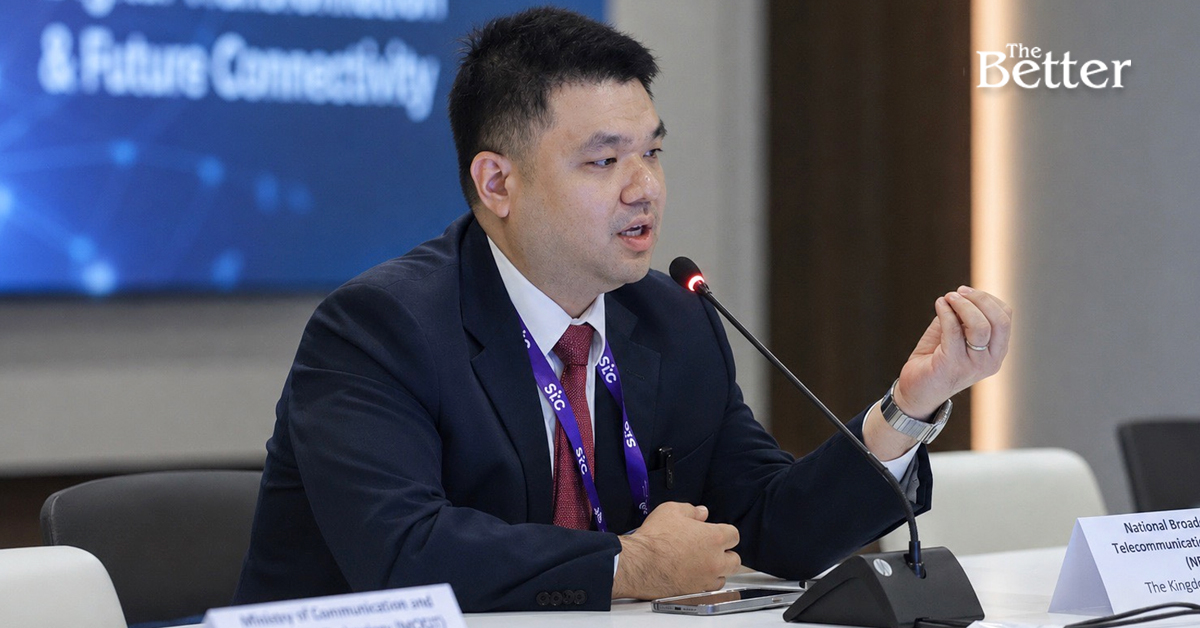
Pachara Naripthaphan, a commissioner of the Securities and Exchange Commission (SEC), has warned that Thailand is facing a combination of slow economic growth, low interest rates and a rapidly ageing population, raising concerns that the country could follow Japan’s past economic trajectory.
International observers have described the phenomenon as “Japanification”—a combination of prolonged sluggish growth, persistently low interest rates and demographic ageing. Phachara said the trend should serve as a warning for Thailand and urged the government to develop a clear strategic plan and timely countermeasures before structural problems become more difficult to address.
Under normal circumstances, Thailand’s policy interest rate of 1% should help stimulate borrowing, consumption and investment. However, the mechanism is currently proving less effective, reflecting deeper structural weaknesses in domestic demand.
Although lower interest rates are theoretically expected to encourage consumers and businesses to borrow and spend, Thailand’s high household debt has weakened this transmission mechanism. Many households are already heavily indebted, with a significant share of their income allocated to servicing existing debt. As a result, lower borrowing costs do not necessarily translate into significantly higher disposable income or stronger consumption.
This has created an additional challenge for the Bank of Thailand, including the need to regulate “Buy Now, Pay Later” (BNPL) services, which can encourage excessive borrowing and weaken financial discipline among consumers.
Demographic and Structural Pressures
Beyond household debt, several other factors are increasing the risk of prolonged economic weakness.
Thailand’s population is shrinking and ageing rapidly, with the fertility rate falling below one child per woman. At the same time, tourism cannot remain the country’s sole engine of economic growth, while the manufacturing and export sectors face increasing competition from low-cost products and emerging production bases such as Vietnam.
Domestic investment is also being constrained by weak local demand.
Pachara highlighted a critical difference between Thailand and Japan. Japan entered its ageing phase after establishing a strong foundation of wealth, productivity and economic development. Thailand, by contrast, is ageing while its per capita income remains at an upper-middle-income level.
This raises the risk that Thailand could become a case of “growing old before getting rich.”
Capital Markets Must Support New Growth Engines
Pachara said Thailand faces constraints on both monetary and fiscal policy. High household debt limits the effectiveness of monetary easing, while public debt approaching the 70% of GDP ceiling limits the government's fiscal space.
Against this backdrop, he said the Thai capital market must play a greater role in directing capital toward new economic engines.
“The real challenge is not simply how much further interest rates can be cut,” Pachara said. “The focus should be on generating investment returns and developing new economic engines strong enough to attract private-sector capital back into investment.”
He identified at least three ways in which capital markets could contribute.
First, they can provide fundraising channels for businesses driving new economic growth, including digital infrastructure, data centers, advanced manufacturing and healthcare.
Second, capital markets can provide alternative channels for private capital to flow into the real economy at a time when the government faces fiscal constraints.
Third, they can support the development of financial products suited to an ageing society, including retirement planning and long-term savings instruments, which will become increasingly important as the share of elderly people in Thailand continues to rise.
Policy Continuity Remains a Key Challenge
Pachara acknowledged that the government has already begun moving in the right direction on several fronts. However, he said some initiatives still lack policy continuity, clear oversight and mechanisms to measure outcomes.
He cited the data center industry as an example. Thailand has succeeded in attracting significant investment from major international players, but questions remain over how the country should manage the sector’s use of resources, including land and energy, and how the benefits of these investments will be distributed within the Thai economy.
“The issue with many Thai policies is not that the direction is wrong, but rather the lack of follow-through. Projects are often left to run their course without anyone monitoring whether the actual outcomes align with the established goals,” Pachara said.
Five Priorities for Thailand
Pachara said the government needs long-term plans backed by concrete monitoring and oversight mechanisms in five key areas:
1. Invest in people and technology with measurable targets
Thailand must invest in education, automation and artificial intelligence, but spending alone is not enough. Clear productivity targets should be established and measured regularly to determine whether investment is producing tangible results.
2. Establish regulations that keep pace with new investment
Regulatory frameworks must develop alongside incoming investment, particularly in sectors such as data centers and advanced manufacturing. Conditions governing energy consumption, land use and the transfer of value to Thai businesses should be established from the outset. Where highly skilled foreign workers are required, Thailand should also have a clear system for managing and integrating foreign talent.
3. Upgrade tourism with a measurable focus on quality
Thailand should move beyond simply setting targets for tourism and develop verifiable measures to attract higher-spending visitors. At the same time, authorities must address “grey-market” businesses that operate outside the formal economy and undermine state revenue.
4. Link public spending to measurable economic returns
Government budget allocations should not be justified solely by announced investment values. Actual economic returns should be evaluated periodically to determine whether projects are delivering their intended benefits and to maintain fiscal discipline.
5. Reduce household debt systematically and continuously
Efforts to reduce household debt should be long-term and systematic rather than short-term or ad hoc. Lowering the debt burden would help restore the effectiveness of monetary policy, allowing future interest-rate cuts to translate more effectively into higher consumption and investment.
Pachara concluded that addressing these challenges requires a long-term approach to structural reform, supported by policy continuity and investor confidence.
“All of this represents a policy challenge in addressing structural issues that requires long-term policy continuity, as well as the confidence of both domestic and foreign investors—factors that all sectors must work together to maintain,” he said.
The Better News English